What is a Genobrand™?
What is a Genobrand™?
What is a Genobrand™?
"Brand" means nothing. Learn where the word broke down, why a new term was necessary, and what a Genobrand™ actually is.
"Brand" means nothing. Learn where the word broke down, why a new term was necessary, and what a Genobrand™ actually is.
"Brand" means nothing. Learn where the word broke down, why a new term was necessary, and what a Genobrand™ actually is.
Read more
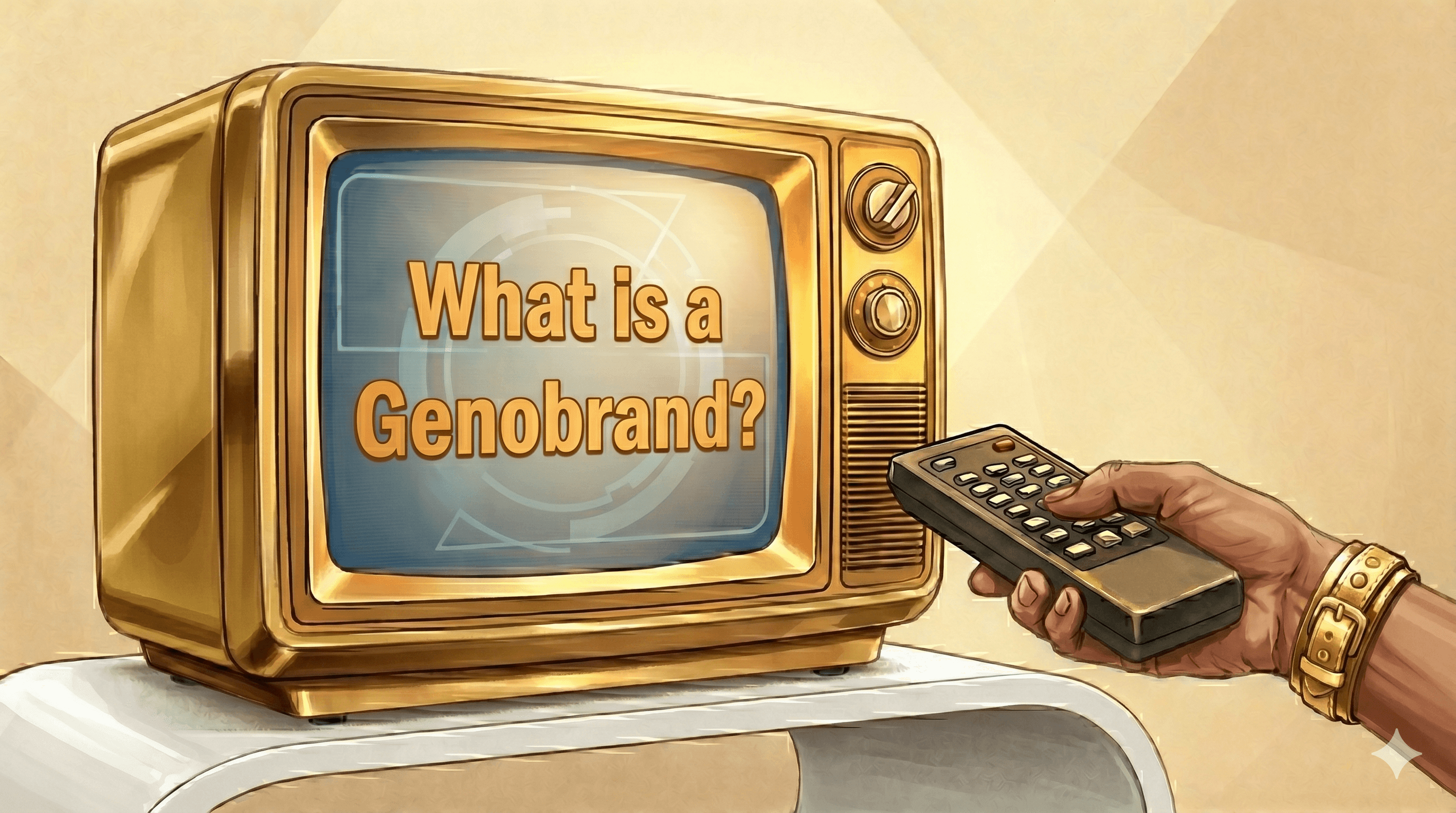
What Is a Genobrand™?
Nobody agrees on what "brand" means.
Not consultants. Not business schools. Not the people charging you tens of thousands of dollars to build one. Ask ten of them the same question and you will get ten completely different answers, all delivered with complete confidence.
"A brand is a promise."
"A brand is what people say about you when you're not in the room."
"A brand is your logo and visual identity."
"A brand is a feeling."
"A brand is your reputation."
"A brand is a story."
Each of these answers contradicts the others. A promise is something you control. What people say when you're not in the room is something you do not. A logo is a concrete visual mark. A feeling is an abstract psychological state. A story is controlled narrative. A reputation is accumulated perception. These are not different ways of describing the same thing. They are fundamentally different things being called by the same word.
And nobody seems bothered by that.
The Word Has Collapsed
There is a simple test you can apply to any word to find out whether it still means something specific. Try replacing it with a different word and see if the sentence still makes sense.
Try it with "brand."
"We need to build our brand." Replace "brand" with "business." Still works. Replace it with "reputation." Still works. Replace it with "presence." Still works. Replace it with "image." Still works.
When a word can be swapped out for five completely different words without changing what the sentence means, that word has stopped doing any real work. It has become a placeholder (a vessel people pour their own meaning into, depending on what they happen to believe that day).
This is not a minor inconvenience. This is a structural failure with real consequences.
The branding industry has quietly built an entire business model on this ambiguity. When "brand" can mean anything, every consultant's interpretation is defensible. Nobody can be held accountable for outcomes that were never precisely defined in the first place. The mystery is not accidental. The mystery is the product.
What the Confusion Actually Costs You
If you cannot define what you are building, you cannot build it on purpose.
You can spend money on it. You can work hard at it. You can follow every piece of advice you find and see results for a while. But if the foundation is undefined, you are not building anything that compounds (meaning: grows stronger and more valuable the longer it exists). You are executing tactics in the hope that something eventually sticks.
Most businesses live here. Not because they are not talented or hardworking, but because nobody ever gave them a precise enough target to aim at.
This is not a personal failing. It is a definitional one.
The Distinction That Changes Everything
Before explaining what a Genobrand™ is, there is a more important distinction to make first.
The difference between a business and a brand.
A business operates. It has products or services, revenue, customers, and systems. There is nothing wrong with being a business. The world runs on them. Most of the largest companies in the world are businesses, and they do exceptionally well.
But a brand is something different. A brand is rare. In the entire history of commerce, only a small number of entities have ever genuinely become one.
The single difference between a business and a brand is that a brand owns a feeling. Not a promise. Not a set of values. Not a story. Those are all elements of marketing. A brand owns a very specific emotional response in the minds of its audience, one that no competitor can replicate, and one that makes everything else in the business more effective.
That is what makes people not just buy from them, but believe in them.
Think about the entities you feel something for, not just the ones you purchase from. The ones where the relationship feels different. Where switching to a competitor feels like a loss, not just an inconvenience. That feeling did not happen by accident. It was built. The question is whether it was built deliberately or by luck.
Most businesses are waiting for the luck version. A Genobrand™ engineers the deliberate one.
Why a New Word Was Necessary
Once it became clear that "brand" had collapsed as a working term, the logical next step seemed obvious: write a better definition and advocate for it.
That approach fails for one reason. You cannot redefine a word you do not control.
Language is not updated by individual will. Dictionaries record how words are already being used, they do not prescribe how they should be used. To change the definition of "brand" would require changing how millions of people across every industry, country, and context already use it. That is not a realistic ambition for any individual or organisation.
Even if it were possible, the best outcome would be adding a third or fourth definition to a word that already has too many. More definitions do not solve a collapse problem. They deepen it.
A new term was the only viable path. Not as a marketing exercise, but as an intellectual and operational necessity.
The term chosen was Genobrand™.
The construction is deliberate. Geno comes from the Greek word genos, meaning origin, birth, or genesis (the starting point of something). Brand comes from the Old Norse word brandr, meaning to burn a mark, which was the original, literal use of the word before it was stretched into everything else. Together, Genobrand™ means an entity that returns to the original, authentic purpose of what "brand" was always supposed to mean before the word collapsed: something that marks itself through behaviour, not decoration.
This is not a rebranding (a new coat of paint on an old idea) of "brand." It is a category reset. A new term with a precise definition, capable of being trademarked, protected, taught academically, and built systematically.
What a Genobrand™ Actually Is
A Genobrand™ is an entity that empowers its audience through the specific words and actions it becomes known for.
Every part of that definition is intentional.
Entity means it applies to companies, individuals, institutions, movements, and any other organised presence, not just corporations.
Empowers means the relationship is directional. A Genobrand™ gives its audience something: a belief, an identity, a sense of possibility they would not have had otherwise.
Specific words and actions means the empowerment is not abstract. It is delivered through concrete, repeatable, observable behaviour. Not a vague feeling that something is different about them, but a precise and consistent pattern of what they say and do.
Becomes known for means it has to be earned over time through proof, not declared through a positioning statement (a written claim about what a company stands for, often found in marketing documents and rarely experienced in reality).
This definition is concrete enough to build from, teach from, and measure against. That is what makes it different from every definition of "brand" that came before it.
What This Means for You
The blogs on this site exist to answer a specific question: how is Genobrand™ different from the frameworks you have already encountered? The Golden Circle. StoryBrand. Brand Archetypes. Traditional branding. Marketing, advertising, and sales. Each comparison is its own article because each deserves a precise answer.
But all of them rest on this foundation.
If you are a business owner who has spent money on branding and walked away with a logo, a colour palette, and a document nobody reads, you were not failed by your execution. You were failed by a definition.
If you are a founder who has read every book, followed every framework, and still cannot explain what makes you genuinely different in a way that lands, you were not failed by your thinking. You were failed by a definition.
Genobrand™ exists because the problem was never effort. It was always precision.
The rest of this body of work is about what to do with that precision once you have it.
What's Next
Start with the comparisons. Each one builds on what you just read and shows exactly how the frameworks you already know stack up against a term that was built to actually work.
Or if you want the bigger picture first, download Brand Crimes. It's free, and an easy way of understanding why building a brand has never been easy, until now.
What Is a Genobrand™?
Nobody agrees on what "brand" means.
Not consultants. Not business schools. Not the people charging you tens of thousands of dollars to build one. Ask ten of them the same question and you will get ten completely different answers, all delivered with complete confidence.
"A brand is a promise."
"A brand is what people say about you when you're not in the room."
"A brand is your logo and visual identity."
"A brand is a feeling."
"A brand is your reputation."
"A brand is a story."
Each of these answers contradicts the others. A promise is something you control. What people say when you're not in the room is something you do not. A logo is a concrete visual mark. A feeling is an abstract psychological state. A story is controlled narrative. A reputation is accumulated perception. These are not different ways of describing the same thing. They are fundamentally different things being called by the same word.
And nobody seems bothered by that.
The Word Has Collapsed
There is a simple test you can apply to any word to find out whether it still means something specific. Try replacing it with a different word and see if the sentence still makes sense.
Try it with "brand."
"We need to build our brand." Replace "brand" with "business." Still works. Replace it with "reputation." Still works. Replace it with "presence." Still works. Replace it with "image." Still works.
When a word can be swapped out for five completely different words without changing what the sentence means, that word has stopped doing any real work. It has become a placeholder (a vessel people pour their own meaning into, depending on what they happen to believe that day).
This is not a minor inconvenience. This is a structural failure with real consequences.
The branding industry has quietly built an entire business model on this ambiguity. When "brand" can mean anything, every consultant's interpretation is defensible. Nobody can be held accountable for outcomes that were never precisely defined in the first place. The mystery is not accidental. The mystery is the product.
What the Confusion Actually Costs You
If you cannot define what you are building, you cannot build it on purpose.
You can spend money on it. You can work hard at it. You can follow every piece of advice you find and see results for a while. But if the foundation is undefined, you are not building anything that compounds (meaning: grows stronger and more valuable the longer it exists). You are executing tactics in the hope that something eventually sticks.
Most businesses live here. Not because they are not talented or hardworking, but because nobody ever gave them a precise enough target to aim at.
This is not a personal failing. It is a definitional one.
The Distinction That Changes Everything
Before explaining what a Genobrand™ is, there is a more important distinction to make first.
The difference between a business and a brand.
A business operates. It has products or services, revenue, customers, and systems. There is nothing wrong with being a business. The world runs on them. Most of the largest companies in the world are businesses, and they do exceptionally well.
But a brand is something different. A brand is rare. In the entire history of commerce, only a small number of entities have ever genuinely become one.
The single difference between a business and a brand is that a brand owns a feeling. Not a promise. Not a set of values. Not a story. Those are all elements of marketing. A brand owns a very specific emotional response in the minds of its audience, one that no competitor can replicate, and one that makes everything else in the business more effective.
That is what makes people not just buy from them, but believe in them.
Think about the entities you feel something for, not just the ones you purchase from. The ones where the relationship feels different. Where switching to a competitor feels like a loss, not just an inconvenience. That feeling did not happen by accident. It was built. The question is whether it was built deliberately or by luck.
Most businesses are waiting for the luck version. A Genobrand™ engineers the deliberate one.
Why a New Word Was Necessary
Once it became clear that "brand" had collapsed as a working term, the logical next step seemed obvious: write a better definition and advocate for it.
That approach fails for one reason. You cannot redefine a word you do not control.
Language is not updated by individual will. Dictionaries record how words are already being used, they do not prescribe how they should be used. To change the definition of "brand" would require changing how millions of people across every industry, country, and context already use it. That is not a realistic ambition for any individual or organisation.
Even if it were possible, the best outcome would be adding a third or fourth definition to a word that already has too many. More definitions do not solve a collapse problem. They deepen it.
A new term was the only viable path. Not as a marketing exercise, but as an intellectual and operational necessity.
The term chosen was Genobrand™.
The construction is deliberate. Geno comes from the Greek word genos, meaning origin, birth, or genesis (the starting point of something). Brand comes from the Old Norse word brandr, meaning to burn a mark, which was the original, literal use of the word before it was stretched into everything else. Together, Genobrand™ means an entity that returns to the original, authentic purpose of what "brand" was always supposed to mean before the word collapsed: something that marks itself through behaviour, not decoration.
This is not a rebranding (a new coat of paint on an old idea) of "brand." It is a category reset. A new term with a precise definition, capable of being trademarked, protected, taught academically, and built systematically.
What a Genobrand™ Actually Is
A Genobrand™ is an entity that empowers its audience through the specific words and actions it becomes known for.
Every part of that definition is intentional.
Entity means it applies to companies, individuals, institutions, movements, and any other organised presence, not just corporations.
Empowers means the relationship is directional. A Genobrand™ gives its audience something: a belief, an identity, a sense of possibility they would not have had otherwise.
Specific words and actions means the empowerment is not abstract. It is delivered through concrete, repeatable, observable behaviour. Not a vague feeling that something is different about them, but a precise and consistent pattern of what they say and do.
Becomes known for means it has to be earned over time through proof, not declared through a positioning statement (a written claim about what a company stands for, often found in marketing documents and rarely experienced in reality).
This definition is concrete enough to build from, teach from, and measure against. That is what makes it different from every definition of "brand" that came before it.
What This Means for You
The blogs on this site exist to answer a specific question: how is Genobrand™ different from the frameworks you have already encountered? The Golden Circle. StoryBrand. Brand Archetypes. Traditional branding. Marketing, advertising, and sales. Each comparison is its own article because each deserves a precise answer.
But all of them rest on this foundation.
If you are a business owner who has spent money on branding and walked away with a logo, a colour palette, and a document nobody reads, you were not failed by your execution. You were failed by a definition.
If you are a founder who has read every book, followed every framework, and still cannot explain what makes you genuinely different in a way that lands, you were not failed by your thinking. You were failed by a definition.
Genobrand™ exists because the problem was never effort. It was always precision.
The rest of this body of work is about what to do with that precision once you have it.
What's Next
Start with the comparisons. Each one builds on what you just read and shows exactly how the frameworks you already know stack up against a term that was built to actually work.
Or if you want the bigger picture first, download Brand Crimes. It's free, and an easy way of understanding why building a brand has never been easy, until now.
What Is a Genobrand™?
Nobody agrees on what "brand" means.
Not consultants. Not business schools. Not the people charging you tens of thousands of dollars to build one. Ask ten of them the same question and you will get ten completely different answers, all delivered with complete confidence.
"A brand is a promise."
"A brand is what people say about you when you're not in the room."
"A brand is your logo and visual identity."
"A brand is a feeling."
"A brand is your reputation."
"A brand is a story."
Each of these answers contradicts the others. A promise is something you control. What people say when you're not in the room is something you do not. A logo is a concrete visual mark. A feeling is an abstract psychological state. A story is controlled narrative. A reputation is accumulated perception. These are not different ways of describing the same thing. They are fundamentally different things being called by the same word.
And nobody seems bothered by that.
The Word Has Collapsed
There is a simple test you can apply to any word to find out whether it still means something specific. Try replacing it with a different word and see if the sentence still makes sense.
Try it with "brand."
"We need to build our brand." Replace "brand" with "business." Still works. Replace it with "reputation." Still works. Replace it with "presence." Still works. Replace it with "image." Still works.
When a word can be swapped out for five completely different words without changing what the sentence means, that word has stopped doing any real work. It has become a placeholder (a vessel people pour their own meaning into, depending on what they happen to believe that day).
This is not a minor inconvenience. This is a structural failure with real consequences.
The branding industry has quietly built an entire business model on this ambiguity. When "brand" can mean anything, every consultant's interpretation is defensible. Nobody can be held accountable for outcomes that were never precisely defined in the first place. The mystery is not accidental. The mystery is the product.
What the Confusion Actually Costs You
If you cannot define what you are building, you cannot build it on purpose.
You can spend money on it. You can work hard at it. You can follow every piece of advice you find and see results for a while. But if the foundation is undefined, you are not building anything that compounds (meaning: grows stronger and more valuable the longer it exists). You are executing tactics in the hope that something eventually sticks.
Most businesses live here. Not because they are not talented or hardworking, but because nobody ever gave them a precise enough target to aim at.
This is not a personal failing. It is a definitional one.
The Distinction That Changes Everything
Before explaining what a Genobrand™ is, there is a more important distinction to make first.
The difference between a business and a brand.
A business operates. It has products or services, revenue, customers, and systems. There is nothing wrong with being a business. The world runs on them. Most of the largest companies in the world are businesses, and they do exceptionally well.
But a brand is something different. A brand is rare. In the entire history of commerce, only a small number of entities have ever genuinely become one.
The single difference between a business and a brand is that a brand owns a feeling. Not a promise. Not a set of values. Not a story. Those are all elements of marketing. A brand owns a very specific emotional response in the minds of its audience, one that no competitor can replicate, and one that makes everything else in the business more effective.
That is what makes people not just buy from them, but believe in them.
Think about the entities you feel something for, not just the ones you purchase from. The ones where the relationship feels different. Where switching to a competitor feels like a loss, not just an inconvenience. That feeling did not happen by accident. It was built. The question is whether it was built deliberately or by luck.
Most businesses are waiting for the luck version. A Genobrand™ engineers the deliberate one.
Why a New Word Was Necessary
Once it became clear that "brand" had collapsed as a working term, the logical next step seemed obvious: write a better definition and advocate for it.
That approach fails for one reason. You cannot redefine a word you do not control.
Language is not updated by individual will. Dictionaries record how words are already being used, they do not prescribe how they should be used. To change the definition of "brand" would require changing how millions of people across every industry, country, and context already use it. That is not a realistic ambition for any individual or organisation.
Even if it were possible, the best outcome would be adding a third or fourth definition to a word that already has too many. More definitions do not solve a collapse problem. They deepen it.
A new term was the only viable path. Not as a marketing exercise, but as an intellectual and operational necessity.
The term chosen was Genobrand™.
The construction is deliberate. Geno comes from the Greek word genos, meaning origin, birth, or genesis (the starting point of something). Brand comes from the Old Norse word brandr, meaning to burn a mark, which was the original, literal use of the word before it was stretched into everything else. Together, Genobrand™ means an entity that returns to the original, authentic purpose of what "brand" was always supposed to mean before the word collapsed: something that marks itself through behaviour, not decoration.
This is not a rebranding (a new coat of paint on an old idea) of "brand." It is a category reset. A new term with a precise definition, capable of being trademarked, protected, taught academically, and built systematically.
What a Genobrand™ Actually Is
A Genobrand™ is an entity that empowers its audience through the specific words and actions it becomes known for.
Every part of that definition is intentional.
Entity means it applies to companies, individuals, institutions, movements, and any other organised presence, not just corporations.
Empowers means the relationship is directional. A Genobrand™ gives its audience something: a belief, an identity, a sense of possibility they would not have had otherwise.
Specific words and actions means the empowerment is not abstract. It is delivered through concrete, repeatable, observable behaviour. Not a vague feeling that something is different about them, but a precise and consistent pattern of what they say and do.
Becomes known for means it has to be earned over time through proof, not declared through a positioning statement (a written claim about what a company stands for, often found in marketing documents and rarely experienced in reality).
This definition is concrete enough to build from, teach from, and measure against. That is what makes it different from every definition of "brand" that came before it.
What This Means for You
The blogs on this site exist to answer a specific question: how is Genobrand™ different from the frameworks you have already encountered? The Golden Circle. StoryBrand. Brand Archetypes. Traditional branding. Marketing, advertising, and sales. Each comparison is its own article because each deserves a precise answer.
But all of them rest on this foundation.
If you are a business owner who has spent money on branding and walked away with a logo, a colour palette, and a document nobody reads, you were not failed by your execution. You were failed by a definition.
If you are a founder who has read every book, followed every framework, and still cannot explain what makes you genuinely different in a way that lands, you were not failed by your thinking. You were failed by a definition.
Genobrand™ exists because the problem was never effort. It was always precision.
The rest of this body of work is about what to do with that precision once you have it.
What's Next
Start with the comparisons. Each one builds on what you just read and shows exactly how the frameworks you already know stack up against a term that was built to actually work.
Or if you want the bigger picture first, download Brand Crimes. It's free, and an easy way of understanding why building a brand has never been easy, until now.
KISS MY BRAND™
KISS MY BRAND™
KISS MY BRAND™
Subscribe for insights on brand development you won't find anywhere else.
Subscribe for insights on brand development you won't find anywhere else.
Subscribe for insights on brand development you won't find anywhere else.