
Genobrand™ vs Brand Archetypes Comparison (2026)
Genobrand™ vs Brand Archetypes Comparison (2026)
Genobrand™ vs Brand Archetypes Comparison (2026)
Understand how Genobrand™ differs from Carl Jung's Brand Archetypes. While archetypes assign personality, Genobrand creates behavioral identity. See why behavior matters more than psychology.
Understand how Genobrand™ differs from Carl Jung's Brand Archetypes. While archetypes assign personality, Genobrand creates behavioral identity. See why behavior matters more than psychology.
Understand how Genobrand™ differs from Carl Jung's Brand Archetypes. While archetypes assign personality, Genobrand creates behavioral identity. See why behavior matters more than psychology.
Compare the frameworks
Genobrand™ vs Brand Archetypes: The Complete Comparison (2026)
If I Asked You What Your Brand Archetype Is, How Would You Answer?
If you've worked with a branding agency or consultant in the past decade, you've probably encountered Brand Archetypes. Maybe you attended a workshop where your team debated whether you're "The Hero" or "The Sage." Perhaps you've seen them referenced in branding books or heard consultants cite them as the foundation of brand personality.
Brand Archetypes have become ubiquitous in the branding industry. Based on Carl Jung's psychological theory, they promise to help brands tap into universal human patterns, create emotional connections, and differentiate through personality.
But here's the question I genuinely can't answer: Where do you actually see Brand Archetypes used after the initial workshop?
I've been building brands for years. I've studied how the most successful brands in the world operate. And while I constantly see archetypes referenced in agency pitches and branding books, I rarely see them show up in actual brand operations, decision-making frameworks, or the day-to-day work of building a brand.
So what's really going on here? Are Brand Archetypes a foundational brand-building framework, or are they something else entirely?
In this post, we'll examine Brand Archetypes honestly. What they are, what they do well, where they fall short, and how they differ from building actual behavioural identity through Genobrand™.
Prefer to watch? This video covers the key differences:
The Brand Education Gap: Why Frameworks Exist Without Accountability
Before we dive into Brand Archetypes specifically, we need to acknowledge something fundamental: brand is not taught in formal education.
You won't find "Brand Building" as a degree program at universities. Business schools teach marketing, not brand. Design schools teach visual identity, not brand systems. There's no accredited program with standards, testing, and accountability for what constitutes "branding."
What happens when there's no formal definition?
Anyone can create a "brand framework" and call it brand strategy. There's no governing body to say they're wrong. No standards to measure against. No consequences for frameworks that don't deliver results.
This creates an environment where frameworks can proliferate based on how good they sound rather than how well they work. If something references psychology (Carl Jung), uses sophisticated terminology (archetypes), and can be packaged into a workshop (discover your personality), it gains traction. Regardless of whether it actually builds brands.
Brand Archetypes are a perfect example of this phenomenon. They sound intellectual, they reference legitimate psychological theory, and they create consensus in workshops. But as we'll explore, there's a significant difference between creative alignment tools and brand-building frameworks.
Let's examine what Brand Archetypes actually are and what they promise to deliver.
What Are Brand Archetypes?
Brand Archetypes are based on the psychological theory of Carl Jung, the renowned Swiss psychiatrist who identified universal patterns of human behaviour and symbolism that exist in what he called the "collective unconscious."
Jung proposed that certain character types, archetypes, appear consistently across cultures, religions, and stories throughout human history. The Hero, The Sage, The Rebel. These aren't just character types in movies. According to Jung, they represent fundamental patterns embedded in human psychology.
From Psychology to Branding
In 2001, Margaret Mark and Carol S. Pearson published The Hero and the Outlaw: Building Extraordinary Brands Through the Power of Archetypes. They adapted Jung's work into a framework for brand personality, creating what has become the dominant personality system in branding.
The 12 Brand Archetypes:
The Innocent - Optimistic, pure, simple (Dove, Coca-Cola)
The Sage - Knowledgeable, wise, expert (Google, PBS)
The Explorer - Independent, adventurous, authentic (Jeep, Patagonia)
The Outlaw - Rebellious, disruptive, revolutionary (Harley-Davidson, Diesel)
The Magician - Transformative, visionary, inspiring (Disney, Apple)
The Hero - Courageous, bold, determined (Nike, FedEx)
The Lover - Passionate, sensual, intimate (Victoria's Secret, Godiva)
The Jester - Playful, humorous, lighthearted (Old Spice, M&M's)
The Everyman - Relatable, down-to-earth, friendly (IKEA, Target)
The Caregiver - Nurturing, compassionate, protective (Johnson & Johnson, Volvo)
The Ruler - Authoritative, controlling, organized (Mercedes-Benz, Rolex)
The Creator - Innovative, artistic, imaginative (Lego, Adobe)
How Agencies Use Brand Archetypes
The typical process involves a workshop where teams:
Review the 12 archetypes and their characteristics
Discuss which personality traits resonate with their brand
Assign a primary archetype (and sometimes a secondary one)
Use this archetype to guide tone of voice, visual identity, and messaging themes
The promise is compelling: by aligning with a universal psychological pattern, your brand can create instant recognition and deep emotional connection with your audience.
But there's a significant gap between the promise and the reality.
Where Archetypes Are Actually Referenced
Here's where things get interesting. If you study branding content (books, articles, case studies, workshops), you'll see Brand Archetypes referenced constantly.
Consultants and agencies regularly cite successful brands as archetype examples:
Nike is "The Hero" (bold, courageous, achievement-oriented)
Apple is "The Creator" or "The Magician" (innovative, transformative)
McDonald's is "The Everyman" (accessible, friendly, relatable)
These examples appear in virtually every discussion of Brand Archetypes. They're used as proof that the framework works. After all, look how successful these brands are.
But here's what I can't find:
Evidence that Nike, Apple, or McDonald's publicly discuss their brand archetypes. Evidence that these frameworks show up in their brand guidelines, operational standards, or decision-making processes. Evidence that they used archetypes to BUILD their brands rather than consultants using them to DESCRIBE successful brands after the fact.
The pattern is clear: Brand Archetypes are used by consultants to analyze and categorize successful brands, but I don't see successful brands using archetypes as their operational framework.
Where archetypes DO show up:
Agency pitch decks ("We'll help you discover your archetype!")
Initial branding workshops (the personality discovery session)
Creative briefs (occasionally, as tone reference)
Branding books (always, as examples and case studies)
Where archetypes DON'T show up:
Public brand guidelines from successful companies
Operational decision-making frameworks
Customer experience design standards
Brand performance measurement systems
This raises an important question: If Brand Archetypes were truly foundational to brand-building, wouldn't you see them referenced constantly in how successful brands actually operate?
The absence is telling. Archetypes appear to be a tool for initial creative alignment, not a framework for building systematic behavioural identity.
What Brand Archetypes Do Exceptionally Well
To be fair and intellectually honest, Brand Archetypes aren't useless. They serve several legitimate purposes, particularly in the early stages of brand development.
1. Creative Team Alignment
When a creative team workshops their brand archetype together, something valuable happens: everyone gets on the same page about personality and tone. If the team agrees "we're The Hero," that becomes shorthand for "bold, action-oriented, empowering" across all creative work.
This alignment has real value. It prevents the designer from creating something whimsical while the copywriter writes something serious. It creates consistency in how the brand shows up creatively.
2. Shared Vocabulary
"We're The Sage" is easier than explaining "We want our tone to be knowledgeable but not condescending, wise but approachable, expert but not intimidating" in every meeting. The archetype becomes shorthand that speeds up creative discussions.
This shared language helps teams make faster decisions and maintain consistency, especially when multiple people are creating content.
3. Initial Direction for Uncertain Brands
For businesses that have zero brand clarity, no sense of personality, no understanding of how they want to show up, archetypes provide a starting point. They offer structure when there is none.
"Pick one of these 12 personalities" is more actionable than "figure out your brand personality from scratch." For companies completely lost on where to begin, archetypes can jumpstart the conversation.
Real Value, Limited Scope
Brand Archetypes work well for creative alignment, shared vocabulary, and initial direction. These are legitimate benefits. The problem isn't that archetypes are worthless. They're often positioned as brand-building frameworks when they're actually creative alignment tools.
The question becomes: What happens when you need to move beyond creative consistency and actually build behavioural identity?
Where Brand Archetypes Fall Short
Brand Archetypes provide value for creative alignment, but they have significant limitations as a brand-building framework. Here's where the gaps become apparent:
1. Personality Claims Don't Equal Behavioural Identity
You can claim to be "The Hero" all you want. You can make your logo bold, use empowering language, and feature athletes in your campaigns. But unless you have systematic behavioural proof, it's just a claim.
The fundamental problem:
Saying you're bold ≠ Being bold
Saying you're wise ≠ Demonstrating wisdom
Saying you're rebellious ≠ Actually disrupting anything
Archetypes give you adjectives to describe your personality. They don't give you behavioural standards to prove it.
Nike isn't successful because they say they're "The Hero." Nike is successful because they have a clear Purpose ("Just Do It" = action over hesitation), a specific Promise (performance and empowerment), and systematic Proof through athlete partnerships, product innovation, and consistent messaging at every touchpoint.
The archetype is a DESCRIPTION of what Nike already built behaviourally. It's not what BUILT Nike.
2. No Differentiation
There are 12 archetypes. There are thousands—possibly millions—of brands. The math doesn't work.
How many sports brands are 'The Hero'? Nike, Under Armour, Adidas, Reebok, New Balance. All bold, achievement-oriented, empowering brands. How many tech companies are 'The Creator'? Adobe, Lego, Etsy, Canva. All innovative and creative.
Your archetype doesn't differentiate you. It puts you in a box with your competitors.
When you and your competitors share the same archetype, you haven't created distinction. You've created sameness with different logos.
3. No Proof Mechanism
This is perhaps the most critical limitation: Brand Archetypes don't include a system for validating that you actually embody the personality you claim.
There's no equivalent of:
Emotional Touchpoints™ (systematic experience design at every interaction)
Emotional Receipts™ (measurable proof that you delivered your promise)
Behavioural consistency standards (operational guidelines that ensure your actions match your claims)
Archetypes stop at personality assignment. They don't extend into proof architecture. You can be "The Caregiver" and treat your customers terribly. You can be "The Sage" and provide terrible advice. The framework has no mechanism to catch this disconnect.
4. They Don't Explain Success
When consultants point to Nike and say "See? The Hero archetype works!", they're making a correlation error.
Nike isn't successful BECAUSE they're "The Hero archetype." Nike is successful because:
They identified a clear enemy (hesitation, self-doubt, the voice that says "I can't")
They created a rallying cry ("Just Do It") that applies to life, not just sports
They made regular people feel like athletes, not just serve actual athletes
They've taken stands on social issues that have nothing to do with athletic performance
They maintain behavioural consistency across decades and touchpoints
The archetype is a convenient label applied after the fact. It doesn't explain the systematic behavioural work that actually built the brand.
5. No Accountability
Because brand has no formal definition and no governing body, you can't be "wrong" about your archetype. Pick one, feel good about it, move on. There's no test, no measurement, no consequence for choosing poorly or failing to embody it.
This lack of accountability means archetypes exist in the realm of subjective creative opinion rather than objective brand-building standards.
The Pattern:
Brand Archetypes are useful for answering "How should we sound creatively?" but they don't answer the more important questions:
What do we stand for?
What transformation do we promise?
How do we prove it systematically?
How do we measure if we're delivering?
For those answers, you need a different framework entirely.
How Genobrand™ Differs: Behaviour Over Personality
Genobrand™ takes a fundamentally different approach. Instead of assigning personality types, we engineer behavioural identity.
The Core Distinction:
Brand Archetypes ask: "What personality type are we?"
Genobrand™ asks: "What do we stand for, what do we promise, and how do we prove it?"
Brand Archetypes provide: Creative descriptor (personality assignment)
Genobrand™ provides: Behavioural operating system (systematic proof architecture)
The Message Is The Hero™
Genobrand™ positions your core belief, your Message, as the hero of your brand story, not a personality trait.
Archetype thinking: "We're The Hero, so we should use bold language and feature achievement"
Genobrand™ thinking:
The heroic belief is "Action Over Hesitation"
This belief fights against self-doubt, procrastination, and the voice that says "I can't"
This belief applies to everyone, not just elite athletes, but anyone facing a moment of decision
The brand proves this belief through consistent behaviour across every touchpoint
The belief is the protagonist. The brand is the champion of that belief. The customer is empowered when that belief wins.
See the difference? One describes personality. The other prescribes systematic behaviour.
Nike: What Genobrand™ Sees vs What Archetypes See
What archetype analysis sees:
Nike is "The Hero"
Personality traits: Bold, courageous, achievement-oriented
Tone: Empowering, challenging, motivational
Creative direction: Feature athletes, show triumph, use powerful imagery
What Genobrand™ sees:
Purpose: "Just Do It" = Action over hesitation
Observable transformation: People who engage with Nike appear to feel capable of action, whether they're elite athletes or someone walking to work. The brand seems to democratize the feeling of athletic empowerment.
What we can observe in their Proof:
Product innovation that serves performance at every level
Campaigns that challenge everyday people to act, not just athletes
Social stands (like the Kaepernick campaign) that prove 'Just Do It' extends beyond sports. Kaepernick acted despite consequences, Nike backed him despite backlash. Purpose proved through behaviour.
Retail environments designed to make anyone feel like they belong in athletic spaces
Consistent messaging that applies "Just Do It" to life decisions, not just workouts
The difference:
Archetypes give you a personality label and creative direction.
Genobrand™ gives you an operational system with behavioural standards at every touchpoint.
One helps you maintain creative consistency. The other helps you build systematic behavioural identity that compounds over time.
Observable, Measurable, Accountable
Here's what Genobrand™ provides that archetypes don't:
Observable: Your Purpose, Promise, and Proof are visible in your actions. Anyone can watch how you behave and verify if you're delivering.
Measurable: Emotional Receipts™ track whether customers experienced what you promised. You can measure brand health through behavioural metrics, not just perception surveys.
Accountable: If your behaviour doesn't match your Purpose and Promise, the disconnect is obvious. The framework creates accountability that archetypes lack.
This is the same standard the article applied to Brand Archetypes. The framework should be held accountable to whether it actually builds brands. Archetypes fail this test because they have no proof mechanism, no measurement, no accountability. Genobrand™ meets the test because the proof, measurement, and accountability are built into the framework itself. If your behaviour doesn't match your Purpose and Promise, the framework is the first thing that exposes the failure.
The Emotional Operating System™
This is what Genobrand™ actually produces. It's categorically different from what any personality framework delivers.
A Genobrand is the emotional infrastructure that determines how an organization behaves and how people feel about it over time. But infrastructure alone is just a concept. It needs a system to make it operational.
The Emotional Operating System is that system. It's the internal architecture that turns a Genobrand from idea into reality. It guides decisions, ensures consistency, and creates the connection that personality frameworks cannot manufacture.
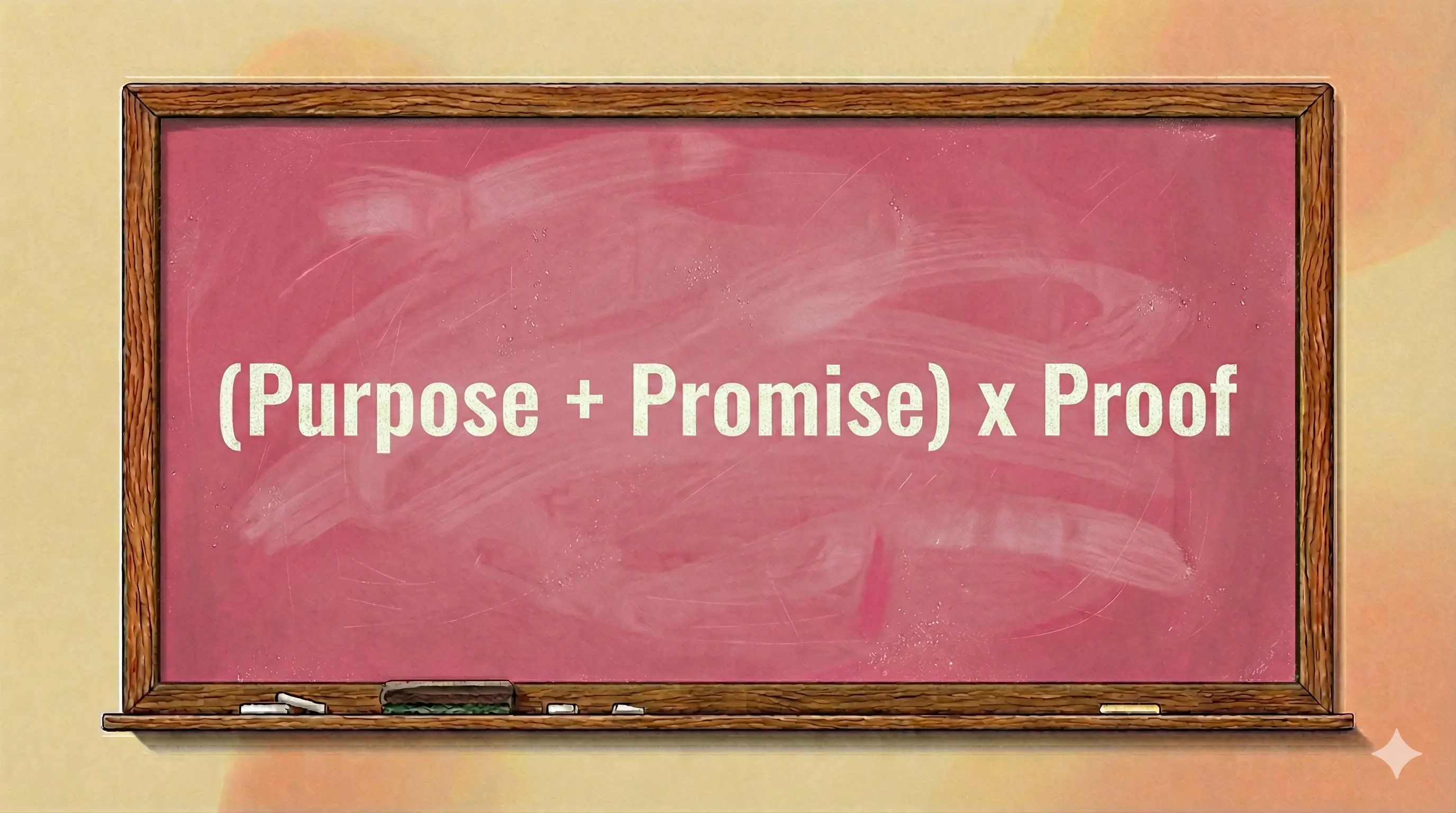
At the core of the Emotional Operating System is the Attention Formula™:
(Purpose + Promise) × Proof = Lasting Emotional Connection
Purpose (Core Purpose Statement™)
Where archetypes give you a personality motivation (e.g., 'The Hero seeks achievement'), Purpose in Genobrand is a specific, ownable belief that your organization and audience share together. Expressed in 2-7 words. Not a generic motivation. A rallying cry that belongs to you.
Promise (Transformational Promise Statement™)
Where archetypes describe the value your personality type provides (e.g., 'The Hero delivers courage'), Promise in Genobrand is the specific transformation customers experience. Not a vague benefit. A measurable change in their lives.
Proof (Emotional Touchpoints™ & Receipts™)
This is what archetypes lack entirely. The systematic behavioural evidence that validates your Purpose and Promise through consistent action at every touchpoint. Not what you claim to be. What you demonstrably are.
The multiplication sign is critical. Without Proof, everything equals zero. You can claim the most compelling personality in the world. If your behaviour doesn't prove it, you've built nothing.
This is why archetype work so often fails to create lasting connection. Organizations identify their personality, communicate it through creative, then behave in ways that contradict it. The arithmetic doesn't work. Personality without proof equals nothing.
The Emotional Operating System also includes the Genobrand Story™. It's the complete narrative framework that communicates your Purpose, Promise, and Proof in a way that invites people to belong.
This isn't a document that informs your creative team. It's operational infrastructure that guides behaviour across your entire organization.
How do you hire? Look for candidates who genuinely believe your Core Purpose. Skill is teachable. Belief is not.
How do you handle customer complaints? Treat the response as an Emotional Touchpoint. The complaint itself is forgettable. How you respond becomes part of what you're known for.
How do you make decisions when facing uncertainty? Use the emotional infrastructure as the guide. Most businesses default to gut feeling or hope. The Emotional Operating System replaces both with reasoning you can actually defend.
The Emotional Operating System isn't personality you describe. It's identity you prove. Through action, at every touchpoint, over time.
When to Use Each Framework
This is simpler than it might seem.
If your goal is creative alignment and shared vocabulary:
Brand Archetypes are designed for exactly this. They help creative teams get on the same page about personality and tone. If that internal alignment is what you're after, archetypes provide useful shorthand.
If your goal is to build systematic behavioural identity:
Genobrand™ builds the operational system that determines how your organization behaves and how customers experience you at every touchpoint. It's not about describing personality. it's about proving identity through action.
The Honest Answer
These frameworks solve different problems.
Brand Archetypes help you describe who you want to be.
Genobrand™ helps you build the infrastructure that proves who you actually are.
If you're focused on creative consistency and team alignment around personality, archetypes address that.
If you're focused on building a system that translates personality claims into consistent behaviour and lasting emotional connection, that's what Genobrand™ and the Emotional Operating System™ are designed for.
The question isn't which comes first or which is better. The question is: What are you actually trying to build?
Why Proof Matters More Than Personality
Here's a truth that's easy to overlook:
Personality claimed is different from personality proven.
You can claim any archetype you want. You can put it in your brand guidelines, discuss it in workshops, and reference it in creative briefs. But unless you build systems to prove it through behaviour, it remains aspiration rather than identity.
The brands we admire aren't admired because they picked the right archetype. They're admired because they built infrastructure that delivers consistent emotional experiences at every interaction.
Nike isn't "The Hero" because a consultant labeled them that way. Nike built systems that prove heroic belief through action. In products, partnerships, campaigns, retail, and service.
The archetype is a description. The infrastructure is what actually built the brand.
Comparison: Brand Archetypes vs Genobrand™
Aspect | Brand Archetypes | Genobrand™ |
Foundation | Jungian psychology | Behavioural science + emotional connection |
Primary Question | "What personality type are we?" | "What do we stand for and how do we prove it?" |
Output | Personality assignment | Behavioural operating system |
Focus | Traits and characteristics | Actions and systematic proof |
Differentiation | Share archetype with competitors | Unique Purpose + Promise + Proof |
Creative Use | Guides tone and visuals | Guides behaviour at every touchpoint |
Proof Mechanism | None | Systematic Emotional Touchpoint™ design |
Consistency | Personality-based (can shift) | Identity-based (compounds over time) |
Measurement | Brand perception surveys | Emotional Receipts™ + recognition metrics |
Customer Experience | Described personality | Felt experience |
Longevity | Campaign-dependent | Operational foundation |
Accountability | None (subjective) | Observable behaviour (objective) |
Operational Use | Creative alignment only | Every touchpoint, every decision |
Conclusion: Expose Your Greatness
Brand Archetypes are a legitimate tool for creative alignment. They help teams develop shared vocabulary, maintain personality consistency, and provide initial direction for brands with no clarity.
But Brand Archetypes are creative alignment tools, not brand-building frameworks. They describe personality. They don't build the infrastructure that proves it.
Genobrand is an infrastructure framework. It takes personality, whether informed by archetypes or developed independently, and builds the Emotional Operating System that turns claims into behaviour, description into proof, personality into consistent experience.
They're not competing frameworks. They're not different versions of the same thing.
They're categorically different because they solve categorically different problems.
If you need creative alignment around personality, archetypes deliver.
If you need to build infrastructure that makes your personality felt, trusted, and provable at every touchpoint, you need something that operates at a fundamentally different level.
Expose your greatness. Not through personality claims alone. Through the emotional infrastructure that makes your identity undeniable.
Frequently Asked Questions
Can I use both Brand Archetypes and Genobrand™?
Yes. Use archetypes to inform your creative direction (tone, visuals, messaging themes), then use Genobrand to design the behavioural system that proves your personality. They're complementary when used correctly. Archetypes for creative, Genobrand for behaviour.
Our brand agency assigned us an archetype. Is that wasted work?
Not at all. The archetype gives you a starting point for personality. Now take it deeper: What belief does that archetype represent? How do you prove that belief through behaviour? Genobrand builds on archetype work by adding the proof layer that archetypes don't address.
What if our competitors have the same archetype?
This is exactly why you need Genobrand. When you and your competitors are all "The Hero" or all "The Creator," archetypes stop differentiating you. Your unique Purpose + Promise + Proof creates differentiation that can't be copied by choosing the same personality type.
Are archetypes outdated?
No, but they're incomplete. Archetypes remain useful for creative alignment. What's outdated is thinking personality assignment alone builds brand loyalty. Modern branding requires behavioural proof, systematic touchpoint design, and measurable delivery of your promise.
Do small businesses need archetypes or Genobrand™?
Small businesses need Genobrand more than archetypes. You don't need personality psychology workshops. You need a system for proving you deliver what you promise. Build behavioural credibility first, worry about personality polish second.
Where do archetypes actually provide value?
Archetypes excel at creative alignment, giving teams shared vocabulary, and providing initial direction for brands with zero personality clarity. They're legitimately useful for these purposes. Just don't confuse creative alignment with brand building.
How can understanding this distinction help me sell better?
Archetypes give you a personality to project. Genobrand gives you a conviction to prove. In sales, personality might get you noticed, but proof gets you chosen. When you have a Core Purpose and Transformational Promise, sales conversations move beyond 'we're The Hero' to 'here's what we stand for and here's how we deliver it.' Prospects don't buy personality traits. They buy trust. Trust comes from behavioural consistency, not archetype alignment.
How does this change how I approach marketing?
Archetypes inform tone and visuals. How your marketing looks and sounds. Genobrand informs what your marketing proves. With archetypes alone, you might create 'Hero-style' campaigns that feel bold and empowering. With Genobrand, every campaign demonstrates your specific Purpose through specific proof. Marketing shifts from expressing a personality type to validating an identity. The archetype might guide the style. The Emotional Operating System guides the substance.
How can this help me create better content?
Archetypes give you a voice. 'Speak like The Sage' or 'write like The Rebel.' Genobrand gives you a centre. What you actually stand for. Content built only on archetype can feel like costume-wearing: you're performing a personality. Content built on Purpose becomes expression: you're proving who you are. Each piece isn't just on-brand tonally. It's evidence of your conviction. The content has weight because there's something real behind it.
How does this affect how I spend money on advertising?
Archetype-driven ads look and sound consistent. Genobrand-driven ads compound into belief. When your advertising only follows an archetype, you're competing with every other brand using the same personality type. Every other 'Hero' or 'Creator' fighting for the same emotional space. When your advertising proves your unique Purpose, Promise, and Proof, it builds something no competitor can copy. Same ad spend, but you're building equity in your specific identity rather than a shared personality category.
Disclosure
Genobrand™, the Emotional Operating System™, the Attention Formula™, Message Is The Hero™, Core Purpose Statement™, Transformational Promise Statement™, Emotional Touchpoints™, Emotional Receipts™, and Genobrand Story™ are proprietary frameworks developed and created by Disco Davoudi.
This comparison was written to provide clarity, not to diminish any framework. Brand Archetypes have helped many teams align around creative direction. The question is whether personality description alone creates the connection you're seeking, or whether behavioural proof is what's actually missing.
What's Next
If this resonated, download and read Brand Crimes. My free guide on why most brand strategy fails and what to do instead.
Genobrand™ vs Brand Archetypes: The Complete Comparison (2026)
If I Asked You What Your Brand Archetype Is, How Would You Answer?
If you've worked with a branding agency or consultant in the past decade, you've probably encountered Brand Archetypes. Maybe you attended a workshop where your team debated whether you're "The Hero" or "The Sage." Perhaps you've seen them referenced in branding books or heard consultants cite them as the foundation of brand personality.
Brand Archetypes have become ubiquitous in the branding industry. Based on Carl Jung's psychological theory, they promise to help brands tap into universal human patterns, create emotional connections, and differentiate through personality.
But here's the question I genuinely can't answer: Where do you actually see Brand Archetypes used after the initial workshop?
I've been building brands for years. I've studied how the most successful brands in the world operate. And while I constantly see archetypes referenced in agency pitches and branding books, I rarely see them show up in actual brand operations, decision-making frameworks, or the day-to-day work of building a brand.
So what's really going on here? Are Brand Archetypes a foundational brand-building framework, or are they something else entirely?
In this post, we'll examine Brand Archetypes honestly. What they are, what they do well, where they fall short, and how they differ from building actual behavioural identity through Genobrand™.
Prefer to watch? This video covers the key differences:
The Brand Education Gap: Why Frameworks Exist Without Accountability
Before we dive into Brand Archetypes specifically, we need to acknowledge something fundamental: brand is not taught in formal education.
You won't find "Brand Building" as a degree program at universities. Business schools teach marketing, not brand. Design schools teach visual identity, not brand systems. There's no accredited program with standards, testing, and accountability for what constitutes "branding."
What happens when there's no formal definition?
Anyone can create a "brand framework" and call it brand strategy. There's no governing body to say they're wrong. No standards to measure against. No consequences for frameworks that don't deliver results.
This creates an environment where frameworks can proliferate based on how good they sound rather than how well they work. If something references psychology (Carl Jung), uses sophisticated terminology (archetypes), and can be packaged into a workshop (discover your personality), it gains traction. Regardless of whether it actually builds brands.
Brand Archetypes are a perfect example of this phenomenon. They sound intellectual, they reference legitimate psychological theory, and they create consensus in workshops. But as we'll explore, there's a significant difference between creative alignment tools and brand-building frameworks.
Let's examine what Brand Archetypes actually are and what they promise to deliver.
What Are Brand Archetypes?
Brand Archetypes are based on the psychological theory of Carl Jung, the renowned Swiss psychiatrist who identified universal patterns of human behaviour and symbolism that exist in what he called the "collective unconscious."
Jung proposed that certain character types, archetypes, appear consistently across cultures, religions, and stories throughout human history. The Hero, The Sage, The Rebel. These aren't just character types in movies. According to Jung, they represent fundamental patterns embedded in human psychology.
From Psychology to Branding
In 2001, Margaret Mark and Carol S. Pearson published The Hero and the Outlaw: Building Extraordinary Brands Through the Power of Archetypes. They adapted Jung's work into a framework for brand personality, creating what has become the dominant personality system in branding.
The 12 Brand Archetypes:
The Innocent - Optimistic, pure, simple (Dove, Coca-Cola)
The Sage - Knowledgeable, wise, expert (Google, PBS)
The Explorer - Independent, adventurous, authentic (Jeep, Patagonia)
The Outlaw - Rebellious, disruptive, revolutionary (Harley-Davidson, Diesel)
The Magician - Transformative, visionary, inspiring (Disney, Apple)
The Hero - Courageous, bold, determined (Nike, FedEx)
The Lover - Passionate, sensual, intimate (Victoria's Secret, Godiva)
The Jester - Playful, humorous, lighthearted (Old Spice, M&M's)
The Everyman - Relatable, down-to-earth, friendly (IKEA, Target)
The Caregiver - Nurturing, compassionate, protective (Johnson & Johnson, Volvo)
The Ruler - Authoritative, controlling, organized (Mercedes-Benz, Rolex)
The Creator - Innovative, artistic, imaginative (Lego, Adobe)
How Agencies Use Brand Archetypes
The typical process involves a workshop where teams:
Review the 12 archetypes and their characteristics
Discuss which personality traits resonate with their brand
Assign a primary archetype (and sometimes a secondary one)
Use this archetype to guide tone of voice, visual identity, and messaging themes
The promise is compelling: by aligning with a universal psychological pattern, your brand can create instant recognition and deep emotional connection with your audience.
But there's a significant gap between the promise and the reality.
Where Archetypes Are Actually Referenced
Here's where things get interesting. If you study branding content (books, articles, case studies, workshops), you'll see Brand Archetypes referenced constantly.
Consultants and agencies regularly cite successful brands as archetype examples:
Nike is "The Hero" (bold, courageous, achievement-oriented)
Apple is "The Creator" or "The Magician" (innovative, transformative)
McDonald's is "The Everyman" (accessible, friendly, relatable)
These examples appear in virtually every discussion of Brand Archetypes. They're used as proof that the framework works. After all, look how successful these brands are.
But here's what I can't find:
Evidence that Nike, Apple, or McDonald's publicly discuss their brand archetypes. Evidence that these frameworks show up in their brand guidelines, operational standards, or decision-making processes. Evidence that they used archetypes to BUILD their brands rather than consultants using them to DESCRIBE successful brands after the fact.
The pattern is clear: Brand Archetypes are used by consultants to analyze and categorize successful brands, but I don't see successful brands using archetypes as their operational framework.
Where archetypes DO show up:
Agency pitch decks ("We'll help you discover your archetype!")
Initial branding workshops (the personality discovery session)
Creative briefs (occasionally, as tone reference)
Branding books (always, as examples and case studies)
Where archetypes DON'T show up:
Public brand guidelines from successful companies
Operational decision-making frameworks
Customer experience design standards
Brand performance measurement systems
This raises an important question: If Brand Archetypes were truly foundational to brand-building, wouldn't you see them referenced constantly in how successful brands actually operate?
The absence is telling. Archetypes appear to be a tool for initial creative alignment, not a framework for building systematic behavioural identity.
What Brand Archetypes Do Exceptionally Well
To be fair and intellectually honest, Brand Archetypes aren't useless. They serve several legitimate purposes, particularly in the early stages of brand development.
1. Creative Team Alignment
When a creative team workshops their brand archetype together, something valuable happens: everyone gets on the same page about personality and tone. If the team agrees "we're The Hero," that becomes shorthand for "bold, action-oriented, empowering" across all creative work.
This alignment has real value. It prevents the designer from creating something whimsical while the copywriter writes something serious. It creates consistency in how the brand shows up creatively.
2. Shared Vocabulary
"We're The Sage" is easier than explaining "We want our tone to be knowledgeable but not condescending, wise but approachable, expert but not intimidating" in every meeting. The archetype becomes shorthand that speeds up creative discussions.
This shared language helps teams make faster decisions and maintain consistency, especially when multiple people are creating content.
3. Initial Direction for Uncertain Brands
For businesses that have zero brand clarity, no sense of personality, no understanding of how they want to show up, archetypes provide a starting point. They offer structure when there is none.
"Pick one of these 12 personalities" is more actionable than "figure out your brand personality from scratch." For companies completely lost on where to begin, archetypes can jumpstart the conversation.
Real Value, Limited Scope
Brand Archetypes work well for creative alignment, shared vocabulary, and initial direction. These are legitimate benefits. The problem isn't that archetypes are worthless. They're often positioned as brand-building frameworks when they're actually creative alignment tools.
The question becomes: What happens when you need to move beyond creative consistency and actually build behavioural identity?
Where Brand Archetypes Fall Short
Brand Archetypes provide value for creative alignment, but they have significant limitations as a brand-building framework. Here's where the gaps become apparent:
1. Personality Claims Don't Equal Behavioural Identity
You can claim to be "The Hero" all you want. You can make your logo bold, use empowering language, and feature athletes in your campaigns. But unless you have systematic behavioural proof, it's just a claim.
The fundamental problem:
Saying you're bold ≠ Being bold
Saying you're wise ≠ Demonstrating wisdom
Saying you're rebellious ≠ Actually disrupting anything
Archetypes give you adjectives to describe your personality. They don't give you behavioural standards to prove it.
Nike isn't successful because they say they're "The Hero." Nike is successful because they have a clear Purpose ("Just Do It" = action over hesitation), a specific Promise (performance and empowerment), and systematic Proof through athlete partnerships, product innovation, and consistent messaging at every touchpoint.
The archetype is a DESCRIPTION of what Nike already built behaviourally. It's not what BUILT Nike.
2. No Differentiation
There are 12 archetypes. There are thousands—possibly millions—of brands. The math doesn't work.
How many sports brands are 'The Hero'? Nike, Under Armour, Adidas, Reebok, New Balance. All bold, achievement-oriented, empowering brands. How many tech companies are 'The Creator'? Adobe, Lego, Etsy, Canva. All innovative and creative.
Your archetype doesn't differentiate you. It puts you in a box with your competitors.
When you and your competitors share the same archetype, you haven't created distinction. You've created sameness with different logos.
3. No Proof Mechanism
This is perhaps the most critical limitation: Brand Archetypes don't include a system for validating that you actually embody the personality you claim.
There's no equivalent of:
Emotional Touchpoints™ (systematic experience design at every interaction)
Emotional Receipts™ (measurable proof that you delivered your promise)
Behavioural consistency standards (operational guidelines that ensure your actions match your claims)
Archetypes stop at personality assignment. They don't extend into proof architecture. You can be "The Caregiver" and treat your customers terribly. You can be "The Sage" and provide terrible advice. The framework has no mechanism to catch this disconnect.
4. They Don't Explain Success
When consultants point to Nike and say "See? The Hero archetype works!", they're making a correlation error.
Nike isn't successful BECAUSE they're "The Hero archetype." Nike is successful because:
They identified a clear enemy (hesitation, self-doubt, the voice that says "I can't")
They created a rallying cry ("Just Do It") that applies to life, not just sports
They made regular people feel like athletes, not just serve actual athletes
They've taken stands on social issues that have nothing to do with athletic performance
They maintain behavioural consistency across decades and touchpoints
The archetype is a convenient label applied after the fact. It doesn't explain the systematic behavioural work that actually built the brand.
5. No Accountability
Because brand has no formal definition and no governing body, you can't be "wrong" about your archetype. Pick one, feel good about it, move on. There's no test, no measurement, no consequence for choosing poorly or failing to embody it.
This lack of accountability means archetypes exist in the realm of subjective creative opinion rather than objective brand-building standards.
The Pattern:
Brand Archetypes are useful for answering "How should we sound creatively?" but they don't answer the more important questions:
What do we stand for?
What transformation do we promise?
How do we prove it systematically?
How do we measure if we're delivering?
For those answers, you need a different framework entirely.
How Genobrand™ Differs: Behaviour Over Personality
Genobrand™ takes a fundamentally different approach. Instead of assigning personality types, we engineer behavioural identity.
The Core Distinction:
Brand Archetypes ask: "What personality type are we?"
Genobrand™ asks: "What do we stand for, what do we promise, and how do we prove it?"
Brand Archetypes provide: Creative descriptor (personality assignment)
Genobrand™ provides: Behavioural operating system (systematic proof architecture)
The Message Is The Hero™
Genobrand™ positions your core belief, your Message, as the hero of your brand story, not a personality trait.
Archetype thinking: "We're The Hero, so we should use bold language and feature achievement"
Genobrand™ thinking:
The heroic belief is "Action Over Hesitation"
This belief fights against self-doubt, procrastination, and the voice that says "I can't"
This belief applies to everyone, not just elite athletes, but anyone facing a moment of decision
The brand proves this belief through consistent behaviour across every touchpoint
The belief is the protagonist. The brand is the champion of that belief. The customer is empowered when that belief wins.
See the difference? One describes personality. The other prescribes systematic behaviour.
Nike: What Genobrand™ Sees vs What Archetypes See
What archetype analysis sees:
Nike is "The Hero"
Personality traits: Bold, courageous, achievement-oriented
Tone: Empowering, challenging, motivational
Creative direction: Feature athletes, show triumph, use powerful imagery
What Genobrand™ sees:
Purpose: "Just Do It" = Action over hesitation
Observable transformation: People who engage with Nike appear to feel capable of action, whether they're elite athletes or someone walking to work. The brand seems to democratize the feeling of athletic empowerment.
What we can observe in their Proof:
Product innovation that serves performance at every level
Campaigns that challenge everyday people to act, not just athletes
Social stands (like the Kaepernick campaign) that prove 'Just Do It' extends beyond sports. Kaepernick acted despite consequences, Nike backed him despite backlash. Purpose proved through behaviour.
Retail environments designed to make anyone feel like they belong in athletic spaces
Consistent messaging that applies "Just Do It" to life decisions, not just workouts
The difference:
Archetypes give you a personality label and creative direction.
Genobrand™ gives you an operational system with behavioural standards at every touchpoint.
One helps you maintain creative consistency. The other helps you build systematic behavioural identity that compounds over time.
Observable, Measurable, Accountable
Here's what Genobrand™ provides that archetypes don't:
Observable: Your Purpose, Promise, and Proof are visible in your actions. Anyone can watch how you behave and verify if you're delivering.
Measurable: Emotional Receipts™ track whether customers experienced what you promised. You can measure brand health through behavioural metrics, not just perception surveys.
Accountable: If your behaviour doesn't match your Purpose and Promise, the disconnect is obvious. The framework creates accountability that archetypes lack.
This is the same standard the article applied to Brand Archetypes. The framework should be held accountable to whether it actually builds brands. Archetypes fail this test because they have no proof mechanism, no measurement, no accountability. Genobrand™ meets the test because the proof, measurement, and accountability are built into the framework itself. If your behaviour doesn't match your Purpose and Promise, the framework is the first thing that exposes the failure.
The Emotional Operating System™
This is what Genobrand™ actually produces. It's categorically different from what any personality framework delivers.
A Genobrand is the emotional infrastructure that determines how an organization behaves and how people feel about it over time. But infrastructure alone is just a concept. It needs a system to make it operational.
The Emotional Operating System is that system. It's the internal architecture that turns a Genobrand from idea into reality. It guides decisions, ensures consistency, and creates the connection that personality frameworks cannot manufacture.
At the core of the Emotional Operating System is the Attention Formula™:
(Purpose + Promise) × Proof = Lasting Emotional Connection
Purpose (Core Purpose Statement™)
Where archetypes give you a personality motivation (e.g., 'The Hero seeks achievement'), Purpose in Genobrand is a specific, ownable belief that your organization and audience share together. Expressed in 2-7 words. Not a generic motivation. A rallying cry that belongs to you.
Promise (Transformational Promise Statement™)
Where archetypes describe the value your personality type provides (e.g., 'The Hero delivers courage'), Promise in Genobrand is the specific transformation customers experience. Not a vague benefit. A measurable change in their lives.
Proof (Emotional Touchpoints™ & Receipts™)
This is what archetypes lack entirely. The systematic behavioural evidence that validates your Purpose and Promise through consistent action at every touchpoint. Not what you claim to be. What you demonstrably are.
The multiplication sign is critical. Without Proof, everything equals zero. You can claim the most compelling personality in the world. If your behaviour doesn't prove it, you've built nothing.
This is why archetype work so often fails to create lasting connection. Organizations identify their personality, communicate it through creative, then behave in ways that contradict it. The arithmetic doesn't work. Personality without proof equals nothing.
The Emotional Operating System also includes the Genobrand Story™. It's the complete narrative framework that communicates your Purpose, Promise, and Proof in a way that invites people to belong.
This isn't a document that informs your creative team. It's operational infrastructure that guides behaviour across your entire organization.
How do you hire? Look for candidates who genuinely believe your Core Purpose. Skill is teachable. Belief is not.
How do you handle customer complaints? Treat the response as an Emotional Touchpoint. The complaint itself is forgettable. How you respond becomes part of what you're known for.
How do you make decisions when facing uncertainty? Use the emotional infrastructure as the guide. Most businesses default to gut feeling or hope. The Emotional Operating System replaces both with reasoning you can actually defend.
The Emotional Operating System isn't personality you describe. It's identity you prove. Through action, at every touchpoint, over time.
When to Use Each Framework
This is simpler than it might seem.
If your goal is creative alignment and shared vocabulary:
Brand Archetypes are designed for exactly this. They help creative teams get on the same page about personality and tone. If that internal alignment is what you're after, archetypes provide useful shorthand.
If your goal is to build systematic behavioural identity:
Genobrand™ builds the operational system that determines how your organization behaves and how customers experience you at every touchpoint. It's not about describing personality. it's about proving identity through action.
The Honest Answer
These frameworks solve different problems.
Brand Archetypes help you describe who you want to be.
Genobrand™ helps you build the infrastructure that proves who you actually are.
If you're focused on creative consistency and team alignment around personality, archetypes address that.
If you're focused on building a system that translates personality claims into consistent behaviour and lasting emotional connection, that's what Genobrand™ and the Emotional Operating System™ are designed for.
The question isn't which comes first or which is better. The question is: What are you actually trying to build?
Why Proof Matters More Than Personality
Here's a truth that's easy to overlook:
Personality claimed is different from personality proven.
You can claim any archetype you want. You can put it in your brand guidelines, discuss it in workshops, and reference it in creative briefs. But unless you build systems to prove it through behaviour, it remains aspiration rather than identity.
The brands we admire aren't admired because they picked the right archetype. They're admired because they built infrastructure that delivers consistent emotional experiences at every interaction.
Nike isn't "The Hero" because a consultant labeled them that way. Nike built systems that prove heroic belief through action. In products, partnerships, campaigns, retail, and service.
The archetype is a description. The infrastructure is what actually built the brand.
Comparison: Brand Archetypes vs Genobrand™
Aspect | Brand Archetypes | Genobrand™ |
Foundation | Jungian psychology | Behavioural science + emotional connection |
Primary Question | "What personality type are we?" | "What do we stand for and how do we prove it?" |
Output | Personality assignment | Behavioural operating system |
Focus | Traits and characteristics | Actions and systematic proof |
Differentiation | Share archetype with competitors | Unique Purpose + Promise + Proof |
Creative Use | Guides tone and visuals | Guides behaviour at every touchpoint |
Proof Mechanism | None | Systematic Emotional Touchpoint™ design |
Consistency | Personality-based (can shift) | Identity-based (compounds over time) |
Measurement | Brand perception surveys | Emotional Receipts™ + recognition metrics |
Customer Experience | Described personality | Felt experience |
Longevity | Campaign-dependent | Operational foundation |
Accountability | None (subjective) | Observable behaviour (objective) |
Operational Use | Creative alignment only | Every touchpoint, every decision |
Conclusion: Expose Your Greatness
Brand Archetypes are a legitimate tool for creative alignment. They help teams develop shared vocabulary, maintain personality consistency, and provide initial direction for brands with no clarity.
But Brand Archetypes are creative alignment tools, not brand-building frameworks. They describe personality. They don't build the infrastructure that proves it.
Genobrand is an infrastructure framework. It takes personality, whether informed by archetypes or developed independently, and builds the Emotional Operating System that turns claims into behaviour, description into proof, personality into consistent experience.
They're not competing frameworks. They're not different versions of the same thing.
They're categorically different because they solve categorically different problems.
If you need creative alignment around personality, archetypes deliver.
If you need to build infrastructure that makes your personality felt, trusted, and provable at every touchpoint, you need something that operates at a fundamentally different level.
Expose your greatness. Not through personality claims alone. Through the emotional infrastructure that makes your identity undeniable.
Frequently Asked Questions
Can I use both Brand Archetypes and Genobrand™?
Yes. Use archetypes to inform your creative direction (tone, visuals, messaging themes), then use Genobrand to design the behavioural system that proves your personality. They're complementary when used correctly. Archetypes for creative, Genobrand for behaviour.
Our brand agency assigned us an archetype. Is that wasted work?
Not at all. The archetype gives you a starting point for personality. Now take it deeper: What belief does that archetype represent? How do you prove that belief through behaviour? Genobrand builds on archetype work by adding the proof layer that archetypes don't address.
What if our competitors have the same archetype?
This is exactly why you need Genobrand. When you and your competitors are all "The Hero" or all "The Creator," archetypes stop differentiating you. Your unique Purpose + Promise + Proof creates differentiation that can't be copied by choosing the same personality type.
Are archetypes outdated?
No, but they're incomplete. Archetypes remain useful for creative alignment. What's outdated is thinking personality assignment alone builds brand loyalty. Modern branding requires behavioural proof, systematic touchpoint design, and measurable delivery of your promise.
Do small businesses need archetypes or Genobrand™?
Small businesses need Genobrand more than archetypes. You don't need personality psychology workshops. You need a system for proving you deliver what you promise. Build behavioural credibility first, worry about personality polish second.
Where do archetypes actually provide value?
Archetypes excel at creative alignment, giving teams shared vocabulary, and providing initial direction for brands with zero personality clarity. They're legitimately useful for these purposes. Just don't confuse creative alignment with brand building.
How can understanding this distinction help me sell better?
Archetypes give you a personality to project. Genobrand gives you a conviction to prove. In sales, personality might get you noticed, but proof gets you chosen. When you have a Core Purpose and Transformational Promise, sales conversations move beyond 'we're The Hero' to 'here's what we stand for and here's how we deliver it.' Prospects don't buy personality traits. They buy trust. Trust comes from behavioural consistency, not archetype alignment.
How does this change how I approach marketing?
Archetypes inform tone and visuals. How your marketing looks and sounds. Genobrand informs what your marketing proves. With archetypes alone, you might create 'Hero-style' campaigns that feel bold and empowering. With Genobrand, every campaign demonstrates your specific Purpose through specific proof. Marketing shifts from expressing a personality type to validating an identity. The archetype might guide the style. The Emotional Operating System guides the substance.
How can this help me create better content?
Archetypes give you a voice. 'Speak like The Sage' or 'write like The Rebel.' Genobrand gives you a centre. What you actually stand for. Content built only on archetype can feel like costume-wearing: you're performing a personality. Content built on Purpose becomes expression: you're proving who you are. Each piece isn't just on-brand tonally. It's evidence of your conviction. The content has weight because there's something real behind it.
How does this affect how I spend money on advertising?
Archetype-driven ads look and sound consistent. Genobrand-driven ads compound into belief. When your advertising only follows an archetype, you're competing with every other brand using the same personality type. Every other 'Hero' or 'Creator' fighting for the same emotional space. When your advertising proves your unique Purpose, Promise, and Proof, it builds something no competitor can copy. Same ad spend, but you're building equity in your specific identity rather than a shared personality category.
Disclosure
Genobrand™, the Emotional Operating System™, the Attention Formula™, Message Is The Hero™, Core Purpose Statement™, Transformational Promise Statement™, Emotional Touchpoints™, Emotional Receipts™, and Genobrand Story™ are proprietary frameworks developed and created by Disco Davoudi.
This comparison was written to provide clarity, not to diminish any framework. Brand Archetypes have helped many teams align around creative direction. The question is whether personality description alone creates the connection you're seeking, or whether behavioural proof is what's actually missing.
What's Next
If this resonated, download and read Brand Crimes. My free guide on why most brand strategy fails and what to do instead.
Genobrand™ vs Brand Archetypes: The Complete Comparison (2026)
If I Asked You What Your Brand Archetype Is, How Would You Answer?
If you've worked with a branding agency or consultant in the past decade, you've probably encountered Brand Archetypes. Maybe you attended a workshop where your team debated whether you're "The Hero" or "The Sage." Perhaps you've seen them referenced in branding books or heard consultants cite them as the foundation of brand personality.
Brand Archetypes have become ubiquitous in the branding industry. Based on Carl Jung's psychological theory, they promise to help brands tap into universal human patterns, create emotional connections, and differentiate through personality.
But here's the question I genuinely can't answer: Where do you actually see Brand Archetypes used after the initial workshop?
I've been building brands for years. I've studied how the most successful brands in the world operate. And while I constantly see archetypes referenced in agency pitches and branding books, I rarely see them show up in actual brand operations, decision-making frameworks, or the day-to-day work of building a brand.
So what's really going on here? Are Brand Archetypes a foundational brand-building framework, or are they something else entirely?
In this post, we'll examine Brand Archetypes honestly. What they are, what they do well, where they fall short, and how they differ from building actual behavioural identity through Genobrand™.
Prefer to watch? This video covers the key differences:
The Brand Education Gap: Why Frameworks Exist Without Accountability
Before we dive into Brand Archetypes specifically, we need to acknowledge something fundamental: brand is not taught in formal education.
You won't find "Brand Building" as a degree program at universities. Business schools teach marketing, not brand. Design schools teach visual identity, not brand systems. There's no accredited program with standards, testing, and accountability for what constitutes "branding."
What happens when there's no formal definition?
Anyone can create a "brand framework" and call it brand strategy. There's no governing body to say they're wrong. No standards to measure against. No consequences for frameworks that don't deliver results.
This creates an environment where frameworks can proliferate based on how good they sound rather than how well they work. If something references psychology (Carl Jung), uses sophisticated terminology (archetypes), and can be packaged into a workshop (discover your personality), it gains traction. Regardless of whether it actually builds brands.
Brand Archetypes are a perfect example of this phenomenon. They sound intellectual, they reference legitimate psychological theory, and they create consensus in workshops. But as we'll explore, there's a significant difference between creative alignment tools and brand-building frameworks.
Let's examine what Brand Archetypes actually are and what they promise to deliver.
What Are Brand Archetypes?
Brand Archetypes are based on the psychological theory of Carl Jung, the renowned Swiss psychiatrist who identified universal patterns of human behaviour and symbolism that exist in what he called the "collective unconscious."
Jung proposed that certain character types, archetypes, appear consistently across cultures, religions, and stories throughout human history. The Hero, The Sage, The Rebel. These aren't just character types in movies. According to Jung, they represent fundamental patterns embedded in human psychology.
From Psychology to Branding
In 2001, Margaret Mark and Carol S. Pearson published The Hero and the Outlaw: Building Extraordinary Brands Through the Power of Archetypes. They adapted Jung's work into a framework for brand personality, creating what has become the dominant personality system in branding.
The 12 Brand Archetypes:
The Innocent - Optimistic, pure, simple (Dove, Coca-Cola)
The Sage - Knowledgeable, wise, expert (Google, PBS)
The Explorer - Independent, adventurous, authentic (Jeep, Patagonia)
The Outlaw - Rebellious, disruptive, revolutionary (Harley-Davidson, Diesel)
The Magician - Transformative, visionary, inspiring (Disney, Apple)
The Hero - Courageous, bold, determined (Nike, FedEx)
The Lover - Passionate, sensual, intimate (Victoria's Secret, Godiva)
The Jester - Playful, humorous, lighthearted (Old Spice, M&M's)
The Everyman - Relatable, down-to-earth, friendly (IKEA, Target)
The Caregiver - Nurturing, compassionate, protective (Johnson & Johnson, Volvo)
The Ruler - Authoritative, controlling, organized (Mercedes-Benz, Rolex)
The Creator - Innovative, artistic, imaginative (Lego, Adobe)
How Agencies Use Brand Archetypes
The typical process involves a workshop where teams:
Review the 12 archetypes and their characteristics
Discuss which personality traits resonate with their brand
Assign a primary archetype (and sometimes a secondary one)
Use this archetype to guide tone of voice, visual identity, and messaging themes
The promise is compelling: by aligning with a universal psychological pattern, your brand can create instant recognition and deep emotional connection with your audience.
But there's a significant gap between the promise and the reality.
Where Archetypes Are Actually Referenced
Here's where things get interesting. If you study branding content (books, articles, case studies, workshops), you'll see Brand Archetypes referenced constantly.
Consultants and agencies regularly cite successful brands as archetype examples:
Nike is "The Hero" (bold, courageous, achievement-oriented)
Apple is "The Creator" or "The Magician" (innovative, transformative)
McDonald's is "The Everyman" (accessible, friendly, relatable)
These examples appear in virtually every discussion of Brand Archetypes. They're used as proof that the framework works. After all, look how successful these brands are.
But here's what I can't find:
Evidence that Nike, Apple, or McDonald's publicly discuss their brand archetypes. Evidence that these frameworks show up in their brand guidelines, operational standards, or decision-making processes. Evidence that they used archetypes to BUILD their brands rather than consultants using them to DESCRIBE successful brands after the fact.
The pattern is clear: Brand Archetypes are used by consultants to analyze and categorize successful brands, but I don't see successful brands using archetypes as their operational framework.
Where archetypes DO show up:
Agency pitch decks ("We'll help you discover your archetype!")
Initial branding workshops (the personality discovery session)
Creative briefs (occasionally, as tone reference)
Branding books (always, as examples and case studies)
Where archetypes DON'T show up:
Public brand guidelines from successful companies
Operational decision-making frameworks
Customer experience design standards
Brand performance measurement systems
This raises an important question: If Brand Archetypes were truly foundational to brand-building, wouldn't you see them referenced constantly in how successful brands actually operate?
The absence is telling. Archetypes appear to be a tool for initial creative alignment, not a framework for building systematic behavioural identity.
What Brand Archetypes Do Exceptionally Well
To be fair and intellectually honest, Brand Archetypes aren't useless. They serve several legitimate purposes, particularly in the early stages of brand development.
1. Creative Team Alignment
When a creative team workshops their brand archetype together, something valuable happens: everyone gets on the same page about personality and tone. If the team agrees "we're The Hero," that becomes shorthand for "bold, action-oriented, empowering" across all creative work.
This alignment has real value. It prevents the designer from creating something whimsical while the copywriter writes something serious. It creates consistency in how the brand shows up creatively.
2. Shared Vocabulary
"We're The Sage" is easier than explaining "We want our tone to be knowledgeable but not condescending, wise but approachable, expert but not intimidating" in every meeting. The archetype becomes shorthand that speeds up creative discussions.
This shared language helps teams make faster decisions and maintain consistency, especially when multiple people are creating content.
3. Initial Direction for Uncertain Brands
For businesses that have zero brand clarity, no sense of personality, no understanding of how they want to show up, archetypes provide a starting point. They offer structure when there is none.
"Pick one of these 12 personalities" is more actionable than "figure out your brand personality from scratch." For companies completely lost on where to begin, archetypes can jumpstart the conversation.
Real Value, Limited Scope
Brand Archetypes work well for creative alignment, shared vocabulary, and initial direction. These are legitimate benefits. The problem isn't that archetypes are worthless. They're often positioned as brand-building frameworks when they're actually creative alignment tools.
The question becomes: What happens when you need to move beyond creative consistency and actually build behavioural identity?
Where Brand Archetypes Fall Short
Brand Archetypes provide value for creative alignment, but they have significant limitations as a brand-building framework. Here's where the gaps become apparent:
1. Personality Claims Don't Equal Behavioural Identity
You can claim to be "The Hero" all you want. You can make your logo bold, use empowering language, and feature athletes in your campaigns. But unless you have systematic behavioural proof, it's just a claim.
The fundamental problem:
Saying you're bold ≠ Being bold
Saying you're wise ≠ Demonstrating wisdom
Saying you're rebellious ≠ Actually disrupting anything
Archetypes give you adjectives to describe your personality. They don't give you behavioural standards to prove it.
Nike isn't successful because they say they're "The Hero." Nike is successful because they have a clear Purpose ("Just Do It" = action over hesitation), a specific Promise (performance and empowerment), and systematic Proof through athlete partnerships, product innovation, and consistent messaging at every touchpoint.
The archetype is a DESCRIPTION of what Nike already built behaviourally. It's not what BUILT Nike.
2. No Differentiation
There are 12 archetypes. There are thousands—possibly millions—of brands. The math doesn't work.
How many sports brands are 'The Hero'? Nike, Under Armour, Adidas, Reebok, New Balance. All bold, achievement-oriented, empowering brands. How many tech companies are 'The Creator'? Adobe, Lego, Etsy, Canva. All innovative and creative.
Your archetype doesn't differentiate you. It puts you in a box with your competitors.
When you and your competitors share the same archetype, you haven't created distinction. You've created sameness with different logos.
3. No Proof Mechanism
This is perhaps the most critical limitation: Brand Archetypes don't include a system for validating that you actually embody the personality you claim.
There's no equivalent of:
Emotional Touchpoints™ (systematic experience design at every interaction)
Emotional Receipts™ (measurable proof that you delivered your promise)
Behavioural consistency standards (operational guidelines that ensure your actions match your claims)
Archetypes stop at personality assignment. They don't extend into proof architecture. You can be "The Caregiver" and treat your customers terribly. You can be "The Sage" and provide terrible advice. The framework has no mechanism to catch this disconnect.
4. They Don't Explain Success
When consultants point to Nike and say "See? The Hero archetype works!", they're making a correlation error.
Nike isn't successful BECAUSE they're "The Hero archetype." Nike is successful because:
They identified a clear enemy (hesitation, self-doubt, the voice that says "I can't")
They created a rallying cry ("Just Do It") that applies to life, not just sports
They made regular people feel like athletes, not just serve actual athletes
They've taken stands on social issues that have nothing to do with athletic performance
They maintain behavioural consistency across decades and touchpoints
The archetype is a convenient label applied after the fact. It doesn't explain the systematic behavioural work that actually built the brand.
5. No Accountability
Because brand has no formal definition and no governing body, you can't be "wrong" about your archetype. Pick one, feel good about it, move on. There's no test, no measurement, no consequence for choosing poorly or failing to embody it.
This lack of accountability means archetypes exist in the realm of subjective creative opinion rather than objective brand-building standards.
The Pattern:
Brand Archetypes are useful for answering "How should we sound creatively?" but they don't answer the more important questions:
What do we stand for?
What transformation do we promise?
How do we prove it systematically?
How do we measure if we're delivering?
For those answers, you need a different framework entirely.
How Genobrand™ Differs: Behaviour Over Personality
Genobrand™ takes a fundamentally different approach. Instead of assigning personality types, we engineer behavioural identity.
The Core Distinction:
Brand Archetypes ask: "What personality type are we?"
Genobrand™ asks: "What do we stand for, what do we promise, and how do we prove it?"
Brand Archetypes provide: Creative descriptor (personality assignment)
Genobrand™ provides: Behavioural operating system (systematic proof architecture)
The Message Is The Hero™
Genobrand™ positions your core belief, your Message, as the hero of your brand story, not a personality trait.
Archetype thinking: "We're The Hero, so we should use bold language and feature achievement"
Genobrand™ thinking:
The heroic belief is "Action Over Hesitation"
This belief fights against self-doubt, procrastination, and the voice that says "I can't"
This belief applies to everyone, not just elite athletes, but anyone facing a moment of decision
The brand proves this belief through consistent behaviour across every touchpoint
The belief is the protagonist. The brand is the champion of that belief. The customer is empowered when that belief wins.
See the difference? One describes personality. The other prescribes systematic behaviour.
Nike: What Genobrand™ Sees vs What Archetypes See
What archetype analysis sees:
Nike is "The Hero"
Personality traits: Bold, courageous, achievement-oriented
Tone: Empowering, challenging, motivational
Creative direction: Feature athletes, show triumph, use powerful imagery
What Genobrand™ sees:
Purpose: "Just Do It" = Action over hesitation
Observable transformation: People who engage with Nike appear to feel capable of action, whether they're elite athletes or someone walking to work. The brand seems to democratize the feeling of athletic empowerment.
What we can observe in their Proof:
Product innovation that serves performance at every level
Campaigns that challenge everyday people to act, not just athletes
Social stands (like the Kaepernick campaign) that prove 'Just Do It' extends beyond sports. Kaepernick acted despite consequences, Nike backed him despite backlash. Purpose proved through behaviour.
Retail environments designed to make anyone feel like they belong in athletic spaces
Consistent messaging that applies "Just Do It" to life decisions, not just workouts
The difference:
Archetypes give you a personality label and creative direction.
Genobrand™ gives you an operational system with behavioural standards at every touchpoint.
One helps you maintain creative consistency. The other helps you build systematic behavioural identity that compounds over time.
Observable, Measurable, Accountable
Here's what Genobrand™ provides that archetypes don't:
Observable: Your Purpose, Promise, and Proof are visible in your actions. Anyone can watch how you behave and verify if you're delivering.
Measurable: Emotional Receipts™ track whether customers experienced what you promised. You can measure brand health through behavioural metrics, not just perception surveys.
Accountable: If your behaviour doesn't match your Purpose and Promise, the disconnect is obvious. The framework creates accountability that archetypes lack.
This is the same standard the article applied to Brand Archetypes. The framework should be held accountable to whether it actually builds brands. Archetypes fail this test because they have no proof mechanism, no measurement, no accountability. Genobrand™ meets the test because the proof, measurement, and accountability are built into the framework itself. If your behaviour doesn't match your Purpose and Promise, the framework is the first thing that exposes the failure.
The Emotional Operating System™
This is what Genobrand™ actually produces. It's categorically different from what any personality framework delivers.
A Genobrand is the emotional infrastructure that determines how an organization behaves and how people feel about it over time. But infrastructure alone is just a concept. It needs a system to make it operational.
The Emotional Operating System is that system. It's the internal architecture that turns a Genobrand from idea into reality. It guides decisions, ensures consistency, and creates the connection that personality frameworks cannot manufacture.
At the core of the Emotional Operating System is the Attention Formula™:
(Purpose + Promise) × Proof = Lasting Emotional Connection
Purpose (Core Purpose Statement™)
Where archetypes give you a personality motivation (e.g., 'The Hero seeks achievement'), Purpose in Genobrand is a specific, ownable belief that your organization and audience share together. Expressed in 2-7 words. Not a generic motivation. A rallying cry that belongs to you.
Promise (Transformational Promise Statement™)
Where archetypes describe the value your personality type provides (e.g., 'The Hero delivers courage'), Promise in Genobrand is the specific transformation customers experience. Not a vague benefit. A measurable change in their lives.
Proof (Emotional Touchpoints™ & Receipts™)
This is what archetypes lack entirely. The systematic behavioural evidence that validates your Purpose and Promise through consistent action at every touchpoint. Not what you claim to be. What you demonstrably are.
The multiplication sign is critical. Without Proof, everything equals zero. You can claim the most compelling personality in the world. If your behaviour doesn't prove it, you've built nothing.
This is why archetype work so often fails to create lasting connection. Organizations identify their personality, communicate it through creative, then behave in ways that contradict it. The arithmetic doesn't work. Personality without proof equals nothing.
The Emotional Operating System also includes the Genobrand Story™. It's the complete narrative framework that communicates your Purpose, Promise, and Proof in a way that invites people to belong.
This isn't a document that informs your creative team. It's operational infrastructure that guides behaviour across your entire organization.
How do you hire? Look for candidates who genuinely believe your Core Purpose. Skill is teachable. Belief is not.
How do you handle customer complaints? Treat the response as an Emotional Touchpoint. The complaint itself is forgettable. How you respond becomes part of what you're known for.
How do you make decisions when facing uncertainty? Use the emotional infrastructure as the guide. Most businesses default to gut feeling or hope. The Emotional Operating System replaces both with reasoning you can actually defend.
The Emotional Operating System isn't personality you describe. It's identity you prove. Through action, at every touchpoint, over time.
When to Use Each Framework
This is simpler than it might seem.
If your goal is creative alignment and shared vocabulary:
Brand Archetypes are designed for exactly this. They help creative teams get on the same page about personality and tone. If that internal alignment is what you're after, archetypes provide useful shorthand.
If your goal is to build systematic behavioural identity:
Genobrand™ builds the operational system that determines how your organization behaves and how customers experience you at every touchpoint. It's not about describing personality. it's about proving identity through action.
The Honest Answer
These frameworks solve different problems.
Brand Archetypes help you describe who you want to be.
Genobrand™ helps you build the infrastructure that proves who you actually are.
If you're focused on creative consistency and team alignment around personality, archetypes address that.
If you're focused on building a system that translates personality claims into consistent behaviour and lasting emotional connection, that's what Genobrand™ and the Emotional Operating System™ are designed for.
The question isn't which comes first or which is better. The question is: What are you actually trying to build?
Why Proof Matters More Than Personality
Here's a truth that's easy to overlook:
Personality claimed is different from personality proven.
You can claim any archetype you want. You can put it in your brand guidelines, discuss it in workshops, and reference it in creative briefs. But unless you build systems to prove it through behaviour, it remains aspiration rather than identity.
The brands we admire aren't admired because they picked the right archetype. They're admired because they built infrastructure that delivers consistent emotional experiences at every interaction.
Nike isn't "The Hero" because a consultant labeled them that way. Nike built systems that prove heroic belief through action. In products, partnerships, campaigns, retail, and service.
The archetype is a description. The infrastructure is what actually built the brand.
Comparison: Brand Archetypes vs Genobrand™
Aspect | Brand Archetypes | Genobrand™ |
Foundation | Jungian psychology | Behavioural science + emotional connection |
Primary Question | "What personality type are we?" | "What do we stand for and how do we prove it?" |
Output | Personality assignment | Behavioural operating system |
Focus | Traits and characteristics | Actions and systematic proof |
Differentiation | Share archetype with competitors | Unique Purpose + Promise + Proof |
Creative Use | Guides tone and visuals | Guides behaviour at every touchpoint |
Proof Mechanism | None | Systematic Emotional Touchpoint™ design |
Consistency | Personality-based (can shift) | Identity-based (compounds over time) |
Measurement | Brand perception surveys | Emotional Receipts™ + recognition metrics |
Customer Experience | Described personality | Felt experience |
Longevity | Campaign-dependent | Operational foundation |
Accountability | None (subjective) | Observable behaviour (objective) |
Operational Use | Creative alignment only | Every touchpoint, every decision |
Conclusion: Expose Your Greatness
Brand Archetypes are a legitimate tool for creative alignment. They help teams develop shared vocabulary, maintain personality consistency, and provide initial direction for brands with no clarity.
But Brand Archetypes are creative alignment tools, not brand-building frameworks. They describe personality. They don't build the infrastructure that proves it.
Genobrand is an infrastructure framework. It takes personality, whether informed by archetypes or developed independently, and builds the Emotional Operating System that turns claims into behaviour, description into proof, personality into consistent experience.
They're not competing frameworks. They're not different versions of the same thing.
They're categorically different because they solve categorically different problems.
If you need creative alignment around personality, archetypes deliver.
If you need to build infrastructure that makes your personality felt, trusted, and provable at every touchpoint, you need something that operates at a fundamentally different level.
Expose your greatness. Not through personality claims alone. Through the emotional infrastructure that makes your identity undeniable.
Frequently Asked Questions
Can I use both Brand Archetypes and Genobrand™?
Yes. Use archetypes to inform your creative direction (tone, visuals, messaging themes), then use Genobrand to design the behavioural system that proves your personality. They're complementary when used correctly. Archetypes for creative, Genobrand for behaviour.
Our brand agency assigned us an archetype. Is that wasted work?
Not at all. The archetype gives you a starting point for personality. Now take it deeper: What belief does that archetype represent? How do you prove that belief through behaviour? Genobrand builds on archetype work by adding the proof layer that archetypes don't address.
What if our competitors have the same archetype?
This is exactly why you need Genobrand. When you and your competitors are all "The Hero" or all "The Creator," archetypes stop differentiating you. Your unique Purpose + Promise + Proof creates differentiation that can't be copied by choosing the same personality type.
Are archetypes outdated?
No, but they're incomplete. Archetypes remain useful for creative alignment. What's outdated is thinking personality assignment alone builds brand loyalty. Modern branding requires behavioural proof, systematic touchpoint design, and measurable delivery of your promise.
Do small businesses need archetypes or Genobrand™?
Small businesses need Genobrand more than archetypes. You don't need personality psychology workshops. You need a system for proving you deliver what you promise. Build behavioural credibility first, worry about personality polish second.
Where do archetypes actually provide value?
Archetypes excel at creative alignment, giving teams shared vocabulary, and providing initial direction for brands with zero personality clarity. They're legitimately useful for these purposes. Just don't confuse creative alignment with brand building.
How can understanding this distinction help me sell better?
Archetypes give you a personality to project. Genobrand gives you a conviction to prove. In sales, personality might get you noticed, but proof gets you chosen. When you have a Core Purpose and Transformational Promise, sales conversations move beyond 'we're The Hero' to 'here's what we stand for and here's how we deliver it.' Prospects don't buy personality traits. They buy trust. Trust comes from behavioural consistency, not archetype alignment.
How does this change how I approach marketing?
Archetypes inform tone and visuals. How your marketing looks and sounds. Genobrand informs what your marketing proves. With archetypes alone, you might create 'Hero-style' campaigns that feel bold and empowering. With Genobrand, every campaign demonstrates your specific Purpose through specific proof. Marketing shifts from expressing a personality type to validating an identity. The archetype might guide the style. The Emotional Operating System guides the substance.
How can this help me create better content?
Archetypes give you a voice. 'Speak like The Sage' or 'write like The Rebel.' Genobrand gives you a centre. What you actually stand for. Content built only on archetype can feel like costume-wearing: you're performing a personality. Content built on Purpose becomes expression: you're proving who you are. Each piece isn't just on-brand tonally. It's evidence of your conviction. The content has weight because there's something real behind it.
How does this affect how I spend money on advertising?
Archetype-driven ads look and sound consistent. Genobrand-driven ads compound into belief. When your advertising only follows an archetype, you're competing with every other brand using the same personality type. Every other 'Hero' or 'Creator' fighting for the same emotional space. When your advertising proves your unique Purpose, Promise, and Proof, it builds something no competitor can copy. Same ad spend, but you're building equity in your specific identity rather than a shared personality category.
Disclosure
Genobrand™, the Emotional Operating System™, the Attention Formula™, Message Is The Hero™, Core Purpose Statement™, Transformational Promise Statement™, Emotional Touchpoints™, Emotional Receipts™, and Genobrand Story™ are proprietary frameworks developed and created by Disco Davoudi.
This comparison was written to provide clarity, not to diminish any framework. Brand Archetypes have helped many teams align around creative direction. The question is whether personality description alone creates the connection you're seeking, or whether behavioural proof is what's actually missing.
What's Next
If this resonated, download and read Brand Crimes. My free guide on why most brand strategy fails and what to do instead.
KISS MY BRAND™
KISS MY BRAND™
KISS MY BRAND™
Subscribe for insights on brand development you won't find anywhere else.
Subscribe for insights on brand development you won't find anywhere else.
Subscribe for insights on brand development you won't find anywhere else.