
Genobrand™ vs Personal Branding Comparison (2026)
Genobrand™ vs Personal Branding Comparison (2026)
Genobrand™ vs Personal Branding Comparison (2026)
"Personal brand" means nothing. "Personal branding" is decoration. Learn what's actually missing and why emotional infrastructure changes everything
"Personal brand" means nothing. "Personal branding" is decoration. Learn what's actually missing and why emotional infrastructure changes everything
"Personal brand" means nothing. "Personal branding" is decoration. Learn what's actually missing and why emotional infrastructure changes everything
Compare the frameworks
Genobrand™ vs Personal Branding: The Complete Comparison (2026)
The Words Are Broken
"Personal brand" is everywhere.
Everyone says you need one. Courses teach you how to build one. Agencies offer to create one for you. Influencers claim to have one.
But ask ten people what "personal brand" actually means and you'll get ten different answers.
Your reputation. Your image. Your vibe. Your story. Your content. Your aesthetic. Your followers. Your niche. Your authenticity.
It means everything. Which means it means nothing.
And it gets worse. "Personal branding" and "personal brand" are used interchangeably. But they're not the same thing.
Personal branding is an activity. Polish. Positioning. Perception management.
Personal brand is supposed to be an identity. Something you become.
But what is that identity? Nobody can say. Because "personal brand" suffers the same definitional collapse as "brand" itself.
A word that can mean anything means nothing. And when the foundation is nothing, everything built on top of it is nothing too.
That's why you can spend years on "personal branding" and still have no one know what you stand for.
Prefer to watch? This video covers the key differences:
You're Human First
Whatever you're trying to build, whatever you're trying to become, you're human first.
And humans connect with other humans through emotional infrastructure. Consistency of words and actions. Predictability. Trust built through behaviour over time.
This is hard enough on its own. Knowing what you stand for. Articulating it clearly. Proving it through how you actually show up. That's real work.
But the personal branding industry doesn't teach any of this. Not with clarity. Not with depth.
They skip the human part entirely and go straight to tactics. Content calendars. Posting schedules. Aesthetic templates. Engagement strategies. Profile optimization.
So "personal brand" became a buzzword. A marketing gimmick. Everyone chasing metrics. Everyone giving each other likes and comments. Everyone high on the endorphins of making each other feel good.
Nobody becoming anything intentionally meaningful.
What Personal Branding Actually Teaches
Personal branding, as it's taught, isn't about identity. It's about polish.
Get a professional headshot. Craft your bio. Define your niche. Pick your colours. Create a content calendar. Post consistently. Engage with your audience. Stay visible.
This is decoration.
It's not that different from polishing a resume. You hire someone to clean it up. They pick the right photo. Tweak your job titles. Rewrite your summary to sound confident. Highlight achievements. Punch up the verbs.
Now it's clean. Professional. Strategic.
But a polished resume might get you the interview. It doesn't get you the job.
Because the real decision comes from who shows up. What you say. How you act. Whether the person matches the paper.
Personal branding has the same problem.
You're taught to position yourself. Optimise your profile. Write better captions. Tell your story compellingly.
This might get you seen.
It doesn't get you believed.
Why It Doesn't Work
Think about your closest friends.
Did you connect with them because of their headshot? Their bio? Their follower count?
No.
You connected because of how they made you feel. Consistently. Through their words and actions. Over time.
Now think about people you've met who look impressive on paper. Great job. Nice clothes. Say all the right things. But the connection never deepens. You can't quite trust them.
Why?
No consistency between what they present and who they are. The packaging doesn't match the person.
That's what personal branding teaches. Optimise the packaging. Ignore the person. Wonder why nothing compounds.
If your personal relationships were built on money and looks, you'd know how empty that connection is. No matter how good it appears from the outside. Transactional. Fragile. Replaceable.
Same with a presence built on followers, impressions, and aesthetics. It looks like connection. But it's just proximity.
100,000 followers doesn't mean 100,000 people who trust you.
Being seen by millions doesn't mean being believed by anyone.
A perfectly optimised profile doesn't mean anyone knows what you stand for.
Someone with 500 followers who stands for something clear will outperform someone with 500,000 followers who stands for nothing.
Metrics measure reach. Clarity creates pull.
What's Actually Missing
Emotional infrastructure.
The consistency of words and actions that lets people predict how you'll show up. The foundation that makes them trust you. The structure that real connection is built on.
This is what's missing from personal branding.
And it matters for everything.
Sales. Without emotional infrastructure, every sale is a fight. You're convincing strangers from zero. With it, trust already exists. People buy because they already believe.
Marketing. Without it, your message is noise. Just another voice in the feed. With it, your message lands because it's consistent. People recognise what you stand for before you say a word.
Advertising. Without it, you're burning money on attention that doesn't convert. With it, every dollar works harder because there's something real behind it.
Confidence. Without it, you second-guess everything. What to post. What to say. How to show up. You're making it up as you go. With it, you know what you stand for. Decisions become easy. You stop performing and start expressing.
Without emotional infrastructure, everything is harder. You're always starting from zero. Every interaction requires you to re-explain yourself. Nothing compounds.
With it, everything gets easier. Trust builds. Connection deepens. People remember what you're about.
So why isn't this taught?
Because in the context of brand, emotional infrastructure has never been defined with clarity or depth. Nobody broke it down into components you can actually build.
So the industry skipped it. They went straight to tactics. Content calendars. Posting schedules. Profile templates. Things you can sell. Things you can measure. Things that feel productive without requiring anyone to do the hard work of figuring out who they actually are.
The whole industry is built on skipping the part that actually matters.
The Path: Becoming vs Decorating
Personal branding = decorating your presence
Optimise your headshot
Polish your bio
Create a content calendar
Post consistently
Build followers
Chase visibility
Personal brand = becoming something people believe in
Clarify what you stand for (Purpose)
Articulate the transformation you create (Promise)
Prove it through consistent behaviour (Proof)
Build trust through emotional predictability
Attract believers, not just followers
You don't build a personal brand through posts. You build it through proof.
That takes courage. Clarity. More sacrifice than content creation.
But once you have it:
You stop wondering what to post because you know what you stand for. Conversations don't start from zero. Content becomes expression instead of performance. Connection compounds instead of resets. You're chosen for who you are, not just what you offer.
Sales get easier. Marketing lands. Confidence is grounded.
Everything changes.
The Emotional Operating System™
Emotional infrastructure isn't abstract. It has a specific structure.
A Genobrand is the emotional infrastructure that determines how you behave and how people feel about you over time. But infrastructure alone is just a concept. It needs a system to make it operational.
The Emotional Operating System is that system. It's the internal architecture that turns a Genobrand from idea into reality. It guides decisions, ensures consistency, and creates the connection that personal branding tactics cannot manufacture.
At the core of the Emotional Operating System is the Attention Formula™:
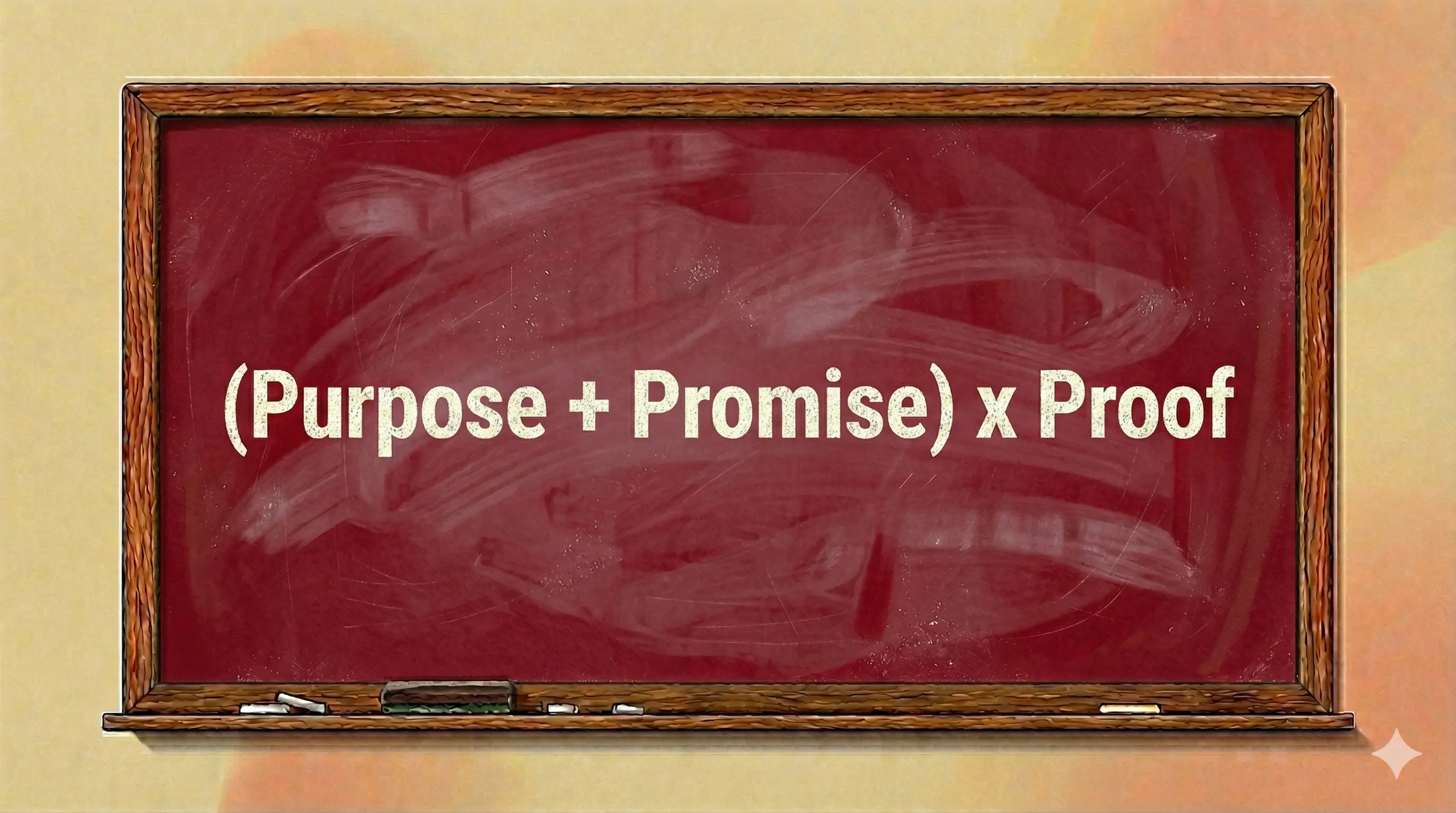
(Purpose + Promise) × Proof = Lasting Emotional Connection
This isn't a business framework. It's how humans connect with other humans. Applied to you:
Purpose (Core Purpose Statement™)
What you stand for in 2-7 words. Not your bio. Not your elevator pitch. The belief that drives everything you do.
This is the phrase people should be able to repeat about you without prompting. If they can't say it, you haven't built it.
Bob Marley: 'One Love.' You can say those words anywhere in the world and people know exactly who and what you're referring to. That wasn't just a song. It was a belief system. A way of behaving that matched the words. Bob Marley didn't optimize his profile. He stood for something so clearly that the world repeated it back to him.
Promise (Transformational Promise Statement™)
What change do you create? Not your service. The transformation people experience from engaging with you.
Proof (Emotional Touchpoints™ & Receipts™)
Consistent behaviour that validates your Purpose and Promise at every interaction.
This is where everyone fails. They have aesthetics, content, and hope. But no systematic proof.
The multiplication sign is critical. Without Proof, everything equals zero. You can have the clearest Purpose and most compelling Promise. If your behaviour doesn't prove it consistently, you have nothing.
The Emotional Operating System also includes the Genobrand Story™. It's the complete narrative framework that communicates your Purpose, Promise, and Proof in a way that invites people to belong.
Personal branding focuses on how you look.
A Genobrand focuses on what you prove.
What This Looks Like
Without emotional infrastructure:
You optimize your profile. New headshot. Polished headline. Post consistently. Build a following.
Ask five of those followers what you stand for. Five different answers. Or blank stares.
Every conversation starts from zero. Every piece of content competes with everything else. There's nothing to remember. Nothing to repeat. Nothing to believe.
Sales require convincing. Marketing feels like shouting. Confidence wavers with every post.
With emotional infrastructure:
You have a Purpose people can repeat without prompting. A Promise that articulates the transformation you create. Proof that validates both through consistent behaviour.
Ask five followers what you stand for. Same answer.
Content isn't random. It's expression of Purpose.
Conversations don't start from zero. People already know what to expect.
Connection compounds. Each interaction reinforces the same emotional experience.
Sales become easier. Marketing lands. Confidence is grounded in clarity.
That's the difference.
Visibility Is Not Identity
Let's dismantle the core myth.
Being visible isn't the same as having a personal brand.
Visibility does not equal identity.
Fame is not the same thing as belief.
Most influencers aren't trusted. They're consumed. They have borrowed attention, not earned belief. The moment they stop posting, they disappear.
You can have millions of followers and still not have a personal brand. Because no one can articulate what you stand for.
The real test:
When people hear your name, what do they feel?
Can they say what you stand for without seeing your bio?
Can they explain your impact without your input?
If not, you don't have a personal brand. You have a presence. Those are not the same thing.
Legacy is historical. Brand is behavioural.
One is for the archives. The other is for the audience.
The Question That Should Haunt You
The personal branding industry assumes visibility creates value. More posts. More platforms. More presence.
But consider this:
Who is the most valuable personal brand on the planet?
Someone who makes billions literally off their name.
Are you guessing?
Michael Jordan.
No personal blog. No podcast. No Twitter takes. No content calendar.
Worth over $4 billion. Still a global icon decades later.
If posting isn't what built the most successful personal brand in history, why would it build yours?
Another question:
Why are some athletes' signature shoes still widely available while others sell out instantly?
Both famous. Both talented. Both have reach.
One stands for something specific. The other is just a name.
A name is not more powerful than purpose.
Comparison: Personal Branding vs Personal Brand (Genobrand™)
Aspect | Personal Branding | Personal Brand (Genobrand™) |
Core Focus | Decorates your presence | Engineers your identity |
Primary Question | "How do I look?" | "What do I prove?" |
Foundation | Visibility | Belief |
Differentiation | Competes on credentials | Connects through consistency |
Sustainability | Requires constant content | Compounds through behaviour |
Outcome | Gets you seen | Gets you chosen |
Audience | Measures followers | Creates believers |
Over Time | Everything starts from zero | Everything compounds |
Sales Impact | Requires convincing | Requires confirmation |
Content | Performance and posting | Expression of Purpose |
Confidence | Wavers with metrics | Grounded in clarity |
Trust | Borrowed attention | Earned belief |
Conclusion: Expose Your Greatness
"Personal brand" has become a buzzword. A marketing gimmick. Everyone chasing metrics. Everyone polishing surfaces. Nobody becoming anything intentionally meaningful.
But you're human first. And humans connect with other humans through emotional infrastructure. Consistency of words and actions that lets people predict how you'll show up.
Personal branding teaches decoration. Headshots, bios, content calendars, posting schedules. This might get you seen. It doesn't get you believed.
A Genobrand teaches identity. Purpose you can articulate. Promise people can feel. Proof you deliver consistently.
The difference matters for everything. Sales. Marketing. Confidence. Connection. Without emotional infrastructure, everything is harder. With it, everything compounds.
You don't build a personal brand through posts. You build it through proof.
That takes courage. Clarity. More sacrifice than content creation.
But once you have it, you stop wondering what to post because you know what you stand for. Conversations don't start from zero. Connection compounds instead of resets. You're chosen for who you are, not just what you offer.
Expose your greatness. Not through decoration. Through the emotional infrastructure that makes people believe.
Frequently Asked Questions
Don't I already have a personal brand whether I like it or not?
No. That's the lie the industry tells to make you feel behind. You might have a reputation. You might have a presence. But a personal brand requires structural clarity: specific words and actions you're known for. Most people have scattered impressions that vary depending on who you ask. That's not a brand. That's noise.
What if I'm not famous enough to have a personal brand?
Fame has nothing to do with it. Visibility is not identity. Some of the most powerful personal brands have small audiences who believe deeply. The question isn't how many people know you. It's whether the people who do can articulate what you stand for.
How is this different from reputation?
Reputation is what people say about you when you're not in the room. It's passive. The accumulation of impressions over time. A personal brand is intentional. The active engineering of consistent emotional connection through Purpose, Promise, and Proof. Reputation happens to you. A brand is built by you.
Can I build a personal brand without social media?
Yes. Michael Jordan, the most valuable personal brand on the planet, doesn't use social media. Social media is a distribution channel, not an identity. If your brand is strong enough, you choose which channels to use, or whether to use them at all. Identity comes first.
How can understanding this distinction help me sell better?
Personal branding teaches you to look impressive. A Genobrand makes you undeniable. When you have a Core Purpose and Transformational Promise, you walk into every sales conversation knowing exactly what you stand for and the change you create. You're not performing confidence. You have it. Prospects feel the difference between someone reciting a pitch and someone speaking from conviction. Sales stops being about convincing and starts being about connecting with people who already believe what you believe. The close happens because alignment is obvious, not because you pushed hard enough.
How does this change how I approach marketing myself?
Personal branding turns marketing into a performance you have to maintain. An Emotional Operating System turns it into expression you can't help but share. When you know your Purpose, Promise, and Proof, marketing yourself becomes effortless because you're not inventing. You're revealing. You can articulate your value a hundred different ways because you're drawing from something real, not memorizing scripts. The exhaustion disappears. You stop wondering "how should I show up?" because you already know who you are.
How can this help me create better content?
Without emotional infrastructure, content is a grind. Every post requires figuring out what to say from scratch. With a Genobrand, content flows. Your Purpose gives you a centre. Your Promise gives you direction. Your Proof gives you endless material. You can write, speak, and create with confidence because every piece connects to something true. Content stops feeling like obligation and starts feeling like opportunity. A chance to prove who you are, again and again, in ways that compound.
How does this affect how I spend money on advertising myself?
Personal branding tells you to boost posts and buy visibility. A Genobrand tells you what that visibility should build toward. When you have emotional infrastructure, every dollar spent on advertising reinforces a specific identity. You're not just getting seen, you're getting believed. Ad spend compounds because there's something real for attention to attach to. Without it, you're renting eyeballs that forget you immediately. With it, you're investing in recognition that lasts.
How can this help with business development and attracting opportunities?
When you stand for something clear, opportunities find you. Partners, collaborators, clients. They're drawn to people who know what they believe. With a Genobrand, you can articulate your value instantly, adapt it to any context, and never sound scripted. You walk into rooms with quiet confidence because you're not hoping people like you, you're looking for people who share your conviction. The right opportunities align. The wrong ones don't waste your time. Business development stops being about chasing and starts being about attracting.
Disclosure
Genobrand™, the Emotional Operating System™, the Attention Formula™, Core Purpose Statement™, Transformational Promise Statement™, Emotional Touchpoints™, Emotional Receipts™, and Genobrand Story™ are proprietary frameworks developed and created by Disco Davoudi.
This comparison was written to provide clarity, not to diminish the value of personal branding tactics. Presence management has its place. The goal is to show why emotional infrastructure makes those tactics exponentially more effective, and why activity without architecture leads to exhaustion.
What's Next
If this resonated, download and read Brand Crimes. My free guide on why most brand strategy fails and what to do instead.
Genobrand™ vs Personal Branding: The Complete Comparison (2026)
The Words Are Broken
"Personal brand" is everywhere.
Everyone says you need one. Courses teach you how to build one. Agencies offer to create one for you. Influencers claim to have one.
But ask ten people what "personal brand" actually means and you'll get ten different answers.
Your reputation. Your image. Your vibe. Your story. Your content. Your aesthetic. Your followers. Your niche. Your authenticity.
It means everything. Which means it means nothing.
And it gets worse. "Personal branding" and "personal brand" are used interchangeably. But they're not the same thing.
Personal branding is an activity. Polish. Positioning. Perception management.
Personal brand is supposed to be an identity. Something you become.
But what is that identity? Nobody can say. Because "personal brand" suffers the same definitional collapse as "brand" itself.
A word that can mean anything means nothing. And when the foundation is nothing, everything built on top of it is nothing too.
That's why you can spend years on "personal branding" and still have no one know what you stand for.
Prefer to watch? This video covers the key differences:
You're Human First
Whatever you're trying to build, whatever you're trying to become, you're human first.
And humans connect with other humans through emotional infrastructure. Consistency of words and actions. Predictability. Trust built through behaviour over time.
This is hard enough on its own. Knowing what you stand for. Articulating it clearly. Proving it through how you actually show up. That's real work.
But the personal branding industry doesn't teach any of this. Not with clarity. Not with depth.
They skip the human part entirely and go straight to tactics. Content calendars. Posting schedules. Aesthetic templates. Engagement strategies. Profile optimization.
So "personal brand" became a buzzword. A marketing gimmick. Everyone chasing metrics. Everyone giving each other likes and comments. Everyone high on the endorphins of making each other feel good.
Nobody becoming anything intentionally meaningful.
What Personal Branding Actually Teaches
Personal branding, as it's taught, isn't about identity. It's about polish.
Get a professional headshot. Craft your bio. Define your niche. Pick your colours. Create a content calendar. Post consistently. Engage with your audience. Stay visible.
This is decoration.
It's not that different from polishing a resume. You hire someone to clean it up. They pick the right photo. Tweak your job titles. Rewrite your summary to sound confident. Highlight achievements. Punch up the verbs.
Now it's clean. Professional. Strategic.
But a polished resume might get you the interview. It doesn't get you the job.
Because the real decision comes from who shows up. What you say. How you act. Whether the person matches the paper.
Personal branding has the same problem.
You're taught to position yourself. Optimise your profile. Write better captions. Tell your story compellingly.
This might get you seen.
It doesn't get you believed.
Why It Doesn't Work
Think about your closest friends.
Did you connect with them because of their headshot? Their bio? Their follower count?
No.
You connected because of how they made you feel. Consistently. Through their words and actions. Over time.
Now think about people you've met who look impressive on paper. Great job. Nice clothes. Say all the right things. But the connection never deepens. You can't quite trust them.
Why?
No consistency between what they present and who they are. The packaging doesn't match the person.
That's what personal branding teaches. Optimise the packaging. Ignore the person. Wonder why nothing compounds.
If your personal relationships were built on money and looks, you'd know how empty that connection is. No matter how good it appears from the outside. Transactional. Fragile. Replaceable.
Same with a presence built on followers, impressions, and aesthetics. It looks like connection. But it's just proximity.
100,000 followers doesn't mean 100,000 people who trust you.
Being seen by millions doesn't mean being believed by anyone.
A perfectly optimised profile doesn't mean anyone knows what you stand for.
Someone with 500 followers who stands for something clear will outperform someone with 500,000 followers who stands for nothing.
Metrics measure reach. Clarity creates pull.
What's Actually Missing
Emotional infrastructure.
The consistency of words and actions that lets people predict how you'll show up. The foundation that makes them trust you. The structure that real connection is built on.
This is what's missing from personal branding.
And it matters for everything.
Sales. Without emotional infrastructure, every sale is a fight. You're convincing strangers from zero. With it, trust already exists. People buy because they already believe.
Marketing. Without it, your message is noise. Just another voice in the feed. With it, your message lands because it's consistent. People recognise what you stand for before you say a word.
Advertising. Without it, you're burning money on attention that doesn't convert. With it, every dollar works harder because there's something real behind it.
Confidence. Without it, you second-guess everything. What to post. What to say. How to show up. You're making it up as you go. With it, you know what you stand for. Decisions become easy. You stop performing and start expressing.
Without emotional infrastructure, everything is harder. You're always starting from zero. Every interaction requires you to re-explain yourself. Nothing compounds.
With it, everything gets easier. Trust builds. Connection deepens. People remember what you're about.
So why isn't this taught?
Because in the context of brand, emotional infrastructure has never been defined with clarity or depth. Nobody broke it down into components you can actually build.
So the industry skipped it. They went straight to tactics. Content calendars. Posting schedules. Profile templates. Things you can sell. Things you can measure. Things that feel productive without requiring anyone to do the hard work of figuring out who they actually are.
The whole industry is built on skipping the part that actually matters.
The Path: Becoming vs Decorating
Personal branding = decorating your presence
Optimise your headshot
Polish your bio
Create a content calendar
Post consistently
Build followers
Chase visibility
Personal brand = becoming something people believe in
Clarify what you stand for (Purpose)
Articulate the transformation you create (Promise)
Prove it through consistent behaviour (Proof)
Build trust through emotional predictability
Attract believers, not just followers
You don't build a personal brand through posts. You build it through proof.
That takes courage. Clarity. More sacrifice than content creation.
But once you have it:
You stop wondering what to post because you know what you stand for. Conversations don't start from zero. Content becomes expression instead of performance. Connection compounds instead of resets. You're chosen for who you are, not just what you offer.
Sales get easier. Marketing lands. Confidence is grounded.
Everything changes.
The Emotional Operating System™
Emotional infrastructure isn't abstract. It has a specific structure.
A Genobrand is the emotional infrastructure that determines how you behave and how people feel about you over time. But infrastructure alone is just a concept. It needs a system to make it operational.
The Emotional Operating System is that system. It's the internal architecture that turns a Genobrand from idea into reality. It guides decisions, ensures consistency, and creates the connection that personal branding tactics cannot manufacture.
At the core of the Emotional Operating System is the Attention Formula™:
(Purpose + Promise) × Proof = Lasting Emotional Connection
This isn't a business framework. It's how humans connect with other humans. Applied to you:
Purpose (Core Purpose Statement™)
What you stand for in 2-7 words. Not your bio. Not your elevator pitch. The belief that drives everything you do.
This is the phrase people should be able to repeat about you without prompting. If they can't say it, you haven't built it.
Bob Marley: 'One Love.' You can say those words anywhere in the world and people know exactly who and what you're referring to. That wasn't just a song. It was a belief system. A way of behaving that matched the words. Bob Marley didn't optimize his profile. He stood for something so clearly that the world repeated it back to him.
Promise (Transformational Promise Statement™)
What change do you create? Not your service. The transformation people experience from engaging with you.
Proof (Emotional Touchpoints™ & Receipts™)
Consistent behaviour that validates your Purpose and Promise at every interaction.
This is where everyone fails. They have aesthetics, content, and hope. But no systematic proof.
The multiplication sign is critical. Without Proof, everything equals zero. You can have the clearest Purpose and most compelling Promise. If your behaviour doesn't prove it consistently, you have nothing.
The Emotional Operating System also includes the Genobrand Story™. It's the complete narrative framework that communicates your Purpose, Promise, and Proof in a way that invites people to belong.
Personal branding focuses on how you look.
A Genobrand focuses on what you prove.
What This Looks Like
Without emotional infrastructure:
You optimize your profile. New headshot. Polished headline. Post consistently. Build a following.
Ask five of those followers what you stand for. Five different answers. Or blank stares.
Every conversation starts from zero. Every piece of content competes with everything else. There's nothing to remember. Nothing to repeat. Nothing to believe.
Sales require convincing. Marketing feels like shouting. Confidence wavers with every post.
With emotional infrastructure:
You have a Purpose people can repeat without prompting. A Promise that articulates the transformation you create. Proof that validates both through consistent behaviour.
Ask five followers what you stand for. Same answer.
Content isn't random. It's expression of Purpose.
Conversations don't start from zero. People already know what to expect.
Connection compounds. Each interaction reinforces the same emotional experience.
Sales become easier. Marketing lands. Confidence is grounded in clarity.
That's the difference.
Visibility Is Not Identity
Let's dismantle the core myth.
Being visible isn't the same as having a personal brand.
Visibility does not equal identity.
Fame is not the same thing as belief.
Most influencers aren't trusted. They're consumed. They have borrowed attention, not earned belief. The moment they stop posting, they disappear.
You can have millions of followers and still not have a personal brand. Because no one can articulate what you stand for.
The real test:
When people hear your name, what do they feel?
Can they say what you stand for without seeing your bio?
Can they explain your impact without your input?
If not, you don't have a personal brand. You have a presence. Those are not the same thing.
Legacy is historical. Brand is behavioural.
One is for the archives. The other is for the audience.
The Question That Should Haunt You
The personal branding industry assumes visibility creates value. More posts. More platforms. More presence.
But consider this:
Who is the most valuable personal brand on the planet?
Someone who makes billions literally off their name.
Are you guessing?
Michael Jordan.
No personal blog. No podcast. No Twitter takes. No content calendar.
Worth over $4 billion. Still a global icon decades later.
If posting isn't what built the most successful personal brand in history, why would it build yours?
Another question:
Why are some athletes' signature shoes still widely available while others sell out instantly?
Both famous. Both talented. Both have reach.
One stands for something specific. The other is just a name.
A name is not more powerful than purpose.
Comparison: Personal Branding vs Personal Brand (Genobrand™)
Aspect | Personal Branding | Personal Brand (Genobrand™) |
Core Focus | Decorates your presence | Engineers your identity |
Primary Question | "How do I look?" | "What do I prove?" |
Foundation | Visibility | Belief |
Differentiation | Competes on credentials | Connects through consistency |
Sustainability | Requires constant content | Compounds through behaviour |
Outcome | Gets you seen | Gets you chosen |
Audience | Measures followers | Creates believers |
Over Time | Everything starts from zero | Everything compounds |
Sales Impact | Requires convincing | Requires confirmation |
Content | Performance and posting | Expression of Purpose |
Confidence | Wavers with metrics | Grounded in clarity |
Trust | Borrowed attention | Earned belief |
Conclusion: Expose Your Greatness
"Personal brand" has become a buzzword. A marketing gimmick. Everyone chasing metrics. Everyone polishing surfaces. Nobody becoming anything intentionally meaningful.
But you're human first. And humans connect with other humans through emotional infrastructure. Consistency of words and actions that lets people predict how you'll show up.
Personal branding teaches decoration. Headshots, bios, content calendars, posting schedules. This might get you seen. It doesn't get you believed.
A Genobrand teaches identity. Purpose you can articulate. Promise people can feel. Proof you deliver consistently.
The difference matters for everything. Sales. Marketing. Confidence. Connection. Without emotional infrastructure, everything is harder. With it, everything compounds.
You don't build a personal brand through posts. You build it through proof.
That takes courage. Clarity. More sacrifice than content creation.
But once you have it, you stop wondering what to post because you know what you stand for. Conversations don't start from zero. Connection compounds instead of resets. You're chosen for who you are, not just what you offer.
Expose your greatness. Not through decoration. Through the emotional infrastructure that makes people believe.
Frequently Asked Questions
Don't I already have a personal brand whether I like it or not?
No. That's the lie the industry tells to make you feel behind. You might have a reputation. You might have a presence. But a personal brand requires structural clarity: specific words and actions you're known for. Most people have scattered impressions that vary depending on who you ask. That's not a brand. That's noise.
What if I'm not famous enough to have a personal brand?
Fame has nothing to do with it. Visibility is not identity. Some of the most powerful personal brands have small audiences who believe deeply. The question isn't how many people know you. It's whether the people who do can articulate what you stand for.
How is this different from reputation?
Reputation is what people say about you when you're not in the room. It's passive. The accumulation of impressions over time. A personal brand is intentional. The active engineering of consistent emotional connection through Purpose, Promise, and Proof. Reputation happens to you. A brand is built by you.
Can I build a personal brand without social media?
Yes. Michael Jordan, the most valuable personal brand on the planet, doesn't use social media. Social media is a distribution channel, not an identity. If your brand is strong enough, you choose which channels to use, or whether to use them at all. Identity comes first.
How can understanding this distinction help me sell better?
Personal branding teaches you to look impressive. A Genobrand makes you undeniable. When you have a Core Purpose and Transformational Promise, you walk into every sales conversation knowing exactly what you stand for and the change you create. You're not performing confidence. You have it. Prospects feel the difference between someone reciting a pitch and someone speaking from conviction. Sales stops being about convincing and starts being about connecting with people who already believe what you believe. The close happens because alignment is obvious, not because you pushed hard enough.
How does this change how I approach marketing myself?
Personal branding turns marketing into a performance you have to maintain. An Emotional Operating System turns it into expression you can't help but share. When you know your Purpose, Promise, and Proof, marketing yourself becomes effortless because you're not inventing. You're revealing. You can articulate your value a hundred different ways because you're drawing from something real, not memorizing scripts. The exhaustion disappears. You stop wondering "how should I show up?" because you already know who you are.
How can this help me create better content?
Without emotional infrastructure, content is a grind. Every post requires figuring out what to say from scratch. With a Genobrand, content flows. Your Purpose gives you a centre. Your Promise gives you direction. Your Proof gives you endless material. You can write, speak, and create with confidence because every piece connects to something true. Content stops feeling like obligation and starts feeling like opportunity. A chance to prove who you are, again and again, in ways that compound.
How does this affect how I spend money on advertising myself?
Personal branding tells you to boost posts and buy visibility. A Genobrand tells you what that visibility should build toward. When you have emotional infrastructure, every dollar spent on advertising reinforces a specific identity. You're not just getting seen, you're getting believed. Ad spend compounds because there's something real for attention to attach to. Without it, you're renting eyeballs that forget you immediately. With it, you're investing in recognition that lasts.
How can this help with business development and attracting opportunities?
When you stand for something clear, opportunities find you. Partners, collaborators, clients. They're drawn to people who know what they believe. With a Genobrand, you can articulate your value instantly, adapt it to any context, and never sound scripted. You walk into rooms with quiet confidence because you're not hoping people like you, you're looking for people who share your conviction. The right opportunities align. The wrong ones don't waste your time. Business development stops being about chasing and starts being about attracting.
Disclosure
Genobrand™, the Emotional Operating System™, the Attention Formula™, Core Purpose Statement™, Transformational Promise Statement™, Emotional Touchpoints™, Emotional Receipts™, and Genobrand Story™ are proprietary frameworks developed and created by Disco Davoudi.
This comparison was written to provide clarity, not to diminish the value of personal branding tactics. Presence management has its place. The goal is to show why emotional infrastructure makes those tactics exponentially more effective, and why activity without architecture leads to exhaustion.
What's Next
If this resonated, download and read Brand Crimes. My free guide on why most brand strategy fails and what to do instead.
Genobrand™ vs Personal Branding: The Complete Comparison (2026)
The Words Are Broken
"Personal brand" is everywhere.
Everyone says you need one. Courses teach you how to build one. Agencies offer to create one for you. Influencers claim to have one.
But ask ten people what "personal brand" actually means and you'll get ten different answers.
Your reputation. Your image. Your vibe. Your story. Your content. Your aesthetic. Your followers. Your niche. Your authenticity.
It means everything. Which means it means nothing.
And it gets worse. "Personal branding" and "personal brand" are used interchangeably. But they're not the same thing.
Personal branding is an activity. Polish. Positioning. Perception management.
Personal brand is supposed to be an identity. Something you become.
But what is that identity? Nobody can say. Because "personal brand" suffers the same definitional collapse as "brand" itself.
A word that can mean anything means nothing. And when the foundation is nothing, everything built on top of it is nothing too.
That's why you can spend years on "personal branding" and still have no one know what you stand for.
Prefer to watch? This video covers the key differences:
You're Human First
Whatever you're trying to build, whatever you're trying to become, you're human first.
And humans connect with other humans through emotional infrastructure. Consistency of words and actions. Predictability. Trust built through behaviour over time.
This is hard enough on its own. Knowing what you stand for. Articulating it clearly. Proving it through how you actually show up. That's real work.
But the personal branding industry doesn't teach any of this. Not with clarity. Not with depth.
They skip the human part entirely and go straight to tactics. Content calendars. Posting schedules. Aesthetic templates. Engagement strategies. Profile optimization.
So "personal brand" became a buzzword. A marketing gimmick. Everyone chasing metrics. Everyone giving each other likes and comments. Everyone high on the endorphins of making each other feel good.
Nobody becoming anything intentionally meaningful.
What Personal Branding Actually Teaches
Personal branding, as it's taught, isn't about identity. It's about polish.
Get a professional headshot. Craft your bio. Define your niche. Pick your colours. Create a content calendar. Post consistently. Engage with your audience. Stay visible.
This is decoration.
It's not that different from polishing a resume. You hire someone to clean it up. They pick the right photo. Tweak your job titles. Rewrite your summary to sound confident. Highlight achievements. Punch up the verbs.
Now it's clean. Professional. Strategic.
But a polished resume might get you the interview. It doesn't get you the job.
Because the real decision comes from who shows up. What you say. How you act. Whether the person matches the paper.
Personal branding has the same problem.
You're taught to position yourself. Optimise your profile. Write better captions. Tell your story compellingly.
This might get you seen.
It doesn't get you believed.
Why It Doesn't Work
Think about your closest friends.
Did you connect with them because of their headshot? Their bio? Their follower count?
No.
You connected because of how they made you feel. Consistently. Through their words and actions. Over time.
Now think about people you've met who look impressive on paper. Great job. Nice clothes. Say all the right things. But the connection never deepens. You can't quite trust them.
Why?
No consistency between what they present and who they are. The packaging doesn't match the person.
That's what personal branding teaches. Optimise the packaging. Ignore the person. Wonder why nothing compounds.
If your personal relationships were built on money and looks, you'd know how empty that connection is. No matter how good it appears from the outside. Transactional. Fragile. Replaceable.
Same with a presence built on followers, impressions, and aesthetics. It looks like connection. But it's just proximity.
100,000 followers doesn't mean 100,000 people who trust you.
Being seen by millions doesn't mean being believed by anyone.
A perfectly optimised profile doesn't mean anyone knows what you stand for.
Someone with 500 followers who stands for something clear will outperform someone with 500,000 followers who stands for nothing.
Metrics measure reach. Clarity creates pull.
What's Actually Missing
Emotional infrastructure.
The consistency of words and actions that lets people predict how you'll show up. The foundation that makes them trust you. The structure that real connection is built on.
This is what's missing from personal branding.
And it matters for everything.
Sales. Without emotional infrastructure, every sale is a fight. You're convincing strangers from zero. With it, trust already exists. People buy because they already believe.
Marketing. Without it, your message is noise. Just another voice in the feed. With it, your message lands because it's consistent. People recognise what you stand for before you say a word.
Advertising. Without it, you're burning money on attention that doesn't convert. With it, every dollar works harder because there's something real behind it.
Confidence. Without it, you second-guess everything. What to post. What to say. How to show up. You're making it up as you go. With it, you know what you stand for. Decisions become easy. You stop performing and start expressing.
Without emotional infrastructure, everything is harder. You're always starting from zero. Every interaction requires you to re-explain yourself. Nothing compounds.
With it, everything gets easier. Trust builds. Connection deepens. People remember what you're about.
So why isn't this taught?
Because in the context of brand, emotional infrastructure has never been defined with clarity or depth. Nobody broke it down into components you can actually build.
So the industry skipped it. They went straight to tactics. Content calendars. Posting schedules. Profile templates. Things you can sell. Things you can measure. Things that feel productive without requiring anyone to do the hard work of figuring out who they actually are.
The whole industry is built on skipping the part that actually matters.
The Path: Becoming vs Decorating
Personal branding = decorating your presence
Optimise your headshot
Polish your bio
Create a content calendar
Post consistently
Build followers
Chase visibility
Personal brand = becoming something people believe in
Clarify what you stand for (Purpose)
Articulate the transformation you create (Promise)
Prove it through consistent behaviour (Proof)
Build trust through emotional predictability
Attract believers, not just followers
You don't build a personal brand through posts. You build it through proof.
That takes courage. Clarity. More sacrifice than content creation.
But once you have it:
You stop wondering what to post because you know what you stand for. Conversations don't start from zero. Content becomes expression instead of performance. Connection compounds instead of resets. You're chosen for who you are, not just what you offer.
Sales get easier. Marketing lands. Confidence is grounded.
Everything changes.
The Emotional Operating System™
Emotional infrastructure isn't abstract. It has a specific structure.
A Genobrand is the emotional infrastructure that determines how you behave and how people feel about you over time. But infrastructure alone is just a concept. It needs a system to make it operational.
The Emotional Operating System is that system. It's the internal architecture that turns a Genobrand from idea into reality. It guides decisions, ensures consistency, and creates the connection that personal branding tactics cannot manufacture.
At the core of the Emotional Operating System is the Attention Formula™:
(Purpose + Promise) × Proof = Lasting Emotional Connection
This isn't a business framework. It's how humans connect with other humans. Applied to you:
Purpose (Core Purpose Statement™)
What you stand for in 2-7 words. Not your bio. Not your elevator pitch. The belief that drives everything you do.
This is the phrase people should be able to repeat about you without prompting. If they can't say it, you haven't built it.
Bob Marley: 'One Love.' You can say those words anywhere in the world and people know exactly who and what you're referring to. That wasn't just a song. It was a belief system. A way of behaving that matched the words. Bob Marley didn't optimize his profile. He stood for something so clearly that the world repeated it back to him.
Promise (Transformational Promise Statement™)
What change do you create? Not your service. The transformation people experience from engaging with you.
Proof (Emotional Touchpoints™ & Receipts™)
Consistent behaviour that validates your Purpose and Promise at every interaction.
This is where everyone fails. They have aesthetics, content, and hope. But no systematic proof.
The multiplication sign is critical. Without Proof, everything equals zero. You can have the clearest Purpose and most compelling Promise. If your behaviour doesn't prove it consistently, you have nothing.
The Emotional Operating System also includes the Genobrand Story™. It's the complete narrative framework that communicates your Purpose, Promise, and Proof in a way that invites people to belong.
Personal branding focuses on how you look.
A Genobrand focuses on what you prove.
What This Looks Like
Without emotional infrastructure:
You optimize your profile. New headshot. Polished headline. Post consistently. Build a following.
Ask five of those followers what you stand for. Five different answers. Or blank stares.
Every conversation starts from zero. Every piece of content competes with everything else. There's nothing to remember. Nothing to repeat. Nothing to believe.
Sales require convincing. Marketing feels like shouting. Confidence wavers with every post.
With emotional infrastructure:
You have a Purpose people can repeat without prompting. A Promise that articulates the transformation you create. Proof that validates both through consistent behaviour.
Ask five followers what you stand for. Same answer.
Content isn't random. It's expression of Purpose.
Conversations don't start from zero. People already know what to expect.
Connection compounds. Each interaction reinforces the same emotional experience.
Sales become easier. Marketing lands. Confidence is grounded in clarity.
That's the difference.
Visibility Is Not Identity
Let's dismantle the core myth.
Being visible isn't the same as having a personal brand.
Visibility does not equal identity.
Fame is not the same thing as belief.
Most influencers aren't trusted. They're consumed. They have borrowed attention, not earned belief. The moment they stop posting, they disappear.
You can have millions of followers and still not have a personal brand. Because no one can articulate what you stand for.
The real test:
When people hear your name, what do they feel?
Can they say what you stand for without seeing your bio?
Can they explain your impact without your input?
If not, you don't have a personal brand. You have a presence. Those are not the same thing.
Legacy is historical. Brand is behavioural.
One is for the archives. The other is for the audience.
The Question That Should Haunt You
The personal branding industry assumes visibility creates value. More posts. More platforms. More presence.
But consider this:
Who is the most valuable personal brand on the planet?
Someone who makes billions literally off their name.
Are you guessing?
Michael Jordan.
No personal blog. No podcast. No Twitter takes. No content calendar.
Worth over $4 billion. Still a global icon decades later.
If posting isn't what built the most successful personal brand in history, why would it build yours?
Another question:
Why are some athletes' signature shoes still widely available while others sell out instantly?
Both famous. Both talented. Both have reach.
One stands for something specific. The other is just a name.
A name is not more powerful than purpose.
Comparison: Personal Branding vs Personal Brand (Genobrand™)
Aspect | Personal Branding | Personal Brand (Genobrand™) |
Core Focus | Decorates your presence | Engineers your identity |
Primary Question | "How do I look?" | "What do I prove?" |
Foundation | Visibility | Belief |
Differentiation | Competes on credentials | Connects through consistency |
Sustainability | Requires constant content | Compounds through behaviour |
Outcome | Gets you seen | Gets you chosen |
Audience | Measures followers | Creates believers |
Over Time | Everything starts from zero | Everything compounds |
Sales Impact | Requires convincing | Requires confirmation |
Content | Performance and posting | Expression of Purpose |
Confidence | Wavers with metrics | Grounded in clarity |
Trust | Borrowed attention | Earned belief |
Conclusion: Expose Your Greatness
"Personal brand" has become a buzzword. A marketing gimmick. Everyone chasing metrics. Everyone polishing surfaces. Nobody becoming anything intentionally meaningful.
But you're human first. And humans connect with other humans through emotional infrastructure. Consistency of words and actions that lets people predict how you'll show up.
Personal branding teaches decoration. Headshots, bios, content calendars, posting schedules. This might get you seen. It doesn't get you believed.
A Genobrand teaches identity. Purpose you can articulate. Promise people can feel. Proof you deliver consistently.
The difference matters for everything. Sales. Marketing. Confidence. Connection. Without emotional infrastructure, everything is harder. With it, everything compounds.
You don't build a personal brand through posts. You build it through proof.
That takes courage. Clarity. More sacrifice than content creation.
But once you have it, you stop wondering what to post because you know what you stand for. Conversations don't start from zero. Connection compounds instead of resets. You're chosen for who you are, not just what you offer.
Expose your greatness. Not through decoration. Through the emotional infrastructure that makes people believe.
Frequently Asked Questions
Don't I already have a personal brand whether I like it or not?
No. That's the lie the industry tells to make you feel behind. You might have a reputation. You might have a presence. But a personal brand requires structural clarity: specific words and actions you're known for. Most people have scattered impressions that vary depending on who you ask. That's not a brand. That's noise.
What if I'm not famous enough to have a personal brand?
Fame has nothing to do with it. Visibility is not identity. Some of the most powerful personal brands have small audiences who believe deeply. The question isn't how many people know you. It's whether the people who do can articulate what you stand for.
How is this different from reputation?
Reputation is what people say about you when you're not in the room. It's passive. The accumulation of impressions over time. A personal brand is intentional. The active engineering of consistent emotional connection through Purpose, Promise, and Proof. Reputation happens to you. A brand is built by you.
Can I build a personal brand without social media?
Yes. Michael Jordan, the most valuable personal brand on the planet, doesn't use social media. Social media is a distribution channel, not an identity. If your brand is strong enough, you choose which channels to use, or whether to use them at all. Identity comes first.
How can understanding this distinction help me sell better?
Personal branding teaches you to look impressive. A Genobrand makes you undeniable. When you have a Core Purpose and Transformational Promise, you walk into every sales conversation knowing exactly what you stand for and the change you create. You're not performing confidence. You have it. Prospects feel the difference between someone reciting a pitch and someone speaking from conviction. Sales stops being about convincing and starts being about connecting with people who already believe what you believe. The close happens because alignment is obvious, not because you pushed hard enough.
How does this change how I approach marketing myself?
Personal branding turns marketing into a performance you have to maintain. An Emotional Operating System turns it into expression you can't help but share. When you know your Purpose, Promise, and Proof, marketing yourself becomes effortless because you're not inventing. You're revealing. You can articulate your value a hundred different ways because you're drawing from something real, not memorizing scripts. The exhaustion disappears. You stop wondering "how should I show up?" because you already know who you are.
How can this help me create better content?
Without emotional infrastructure, content is a grind. Every post requires figuring out what to say from scratch. With a Genobrand, content flows. Your Purpose gives you a centre. Your Promise gives you direction. Your Proof gives you endless material. You can write, speak, and create with confidence because every piece connects to something true. Content stops feeling like obligation and starts feeling like opportunity. A chance to prove who you are, again and again, in ways that compound.
How does this affect how I spend money on advertising myself?
Personal branding tells you to boost posts and buy visibility. A Genobrand tells you what that visibility should build toward. When you have emotional infrastructure, every dollar spent on advertising reinforces a specific identity. You're not just getting seen, you're getting believed. Ad spend compounds because there's something real for attention to attach to. Without it, you're renting eyeballs that forget you immediately. With it, you're investing in recognition that lasts.
How can this help with business development and attracting opportunities?
When you stand for something clear, opportunities find you. Partners, collaborators, clients. They're drawn to people who know what they believe. With a Genobrand, you can articulate your value instantly, adapt it to any context, and never sound scripted. You walk into rooms with quiet confidence because you're not hoping people like you, you're looking for people who share your conviction. The right opportunities align. The wrong ones don't waste your time. Business development stops being about chasing and starts being about attracting.
Disclosure
Genobrand™, the Emotional Operating System™, the Attention Formula™, Core Purpose Statement™, Transformational Promise Statement™, Emotional Touchpoints™, Emotional Receipts™, and Genobrand Story™ are proprietary frameworks developed and created by Disco Davoudi.
This comparison was written to provide clarity, not to diminish the value of personal branding tactics. Presence management has its place. The goal is to show why emotional infrastructure makes those tactics exponentially more effective, and why activity without architecture leads to exhaustion.
What's Next
If this resonated, download and read Brand Crimes. My free guide on why most brand strategy fails and what to do instead.
KISS MY BRAND™
KISS MY BRAND™
KISS MY BRAND™
Subscribe for insights on brand development you won't find anywhere else.
Subscribe for insights on brand development you won't find anywhere else.
Subscribe for insights on brand development you won't find anywhere else.